
cuban sandwich recipe problems usually come down to one thing: the sandwich never truly gets pressed, so the bread stays pale, the cheese doesn’t bind the layers, and every bite feels a little “off.” The good news is you don’t need a café panini station to fix that, you just need the right stack, steady heat, and a press setup that actually applies even weight.
If you’ve made one that turned soggy, tasted overly salty, or slid apart the moment you cut it, you’re not alone. Cuban sandwiches are simple on paper, but they’re picky about details, especially bread choice, pickle placement, and temperature management.
This guide walks you through an at-home build that tastes close to what you’d expect in Miami or Tampa, plus a few realistic substitutions for typical U.S. grocery stores. You’ll also get a clear pressing workflow, timing targets, and a quick troubleshooting section, because sometimes the “recipe” is fine and the technique is what needs help.
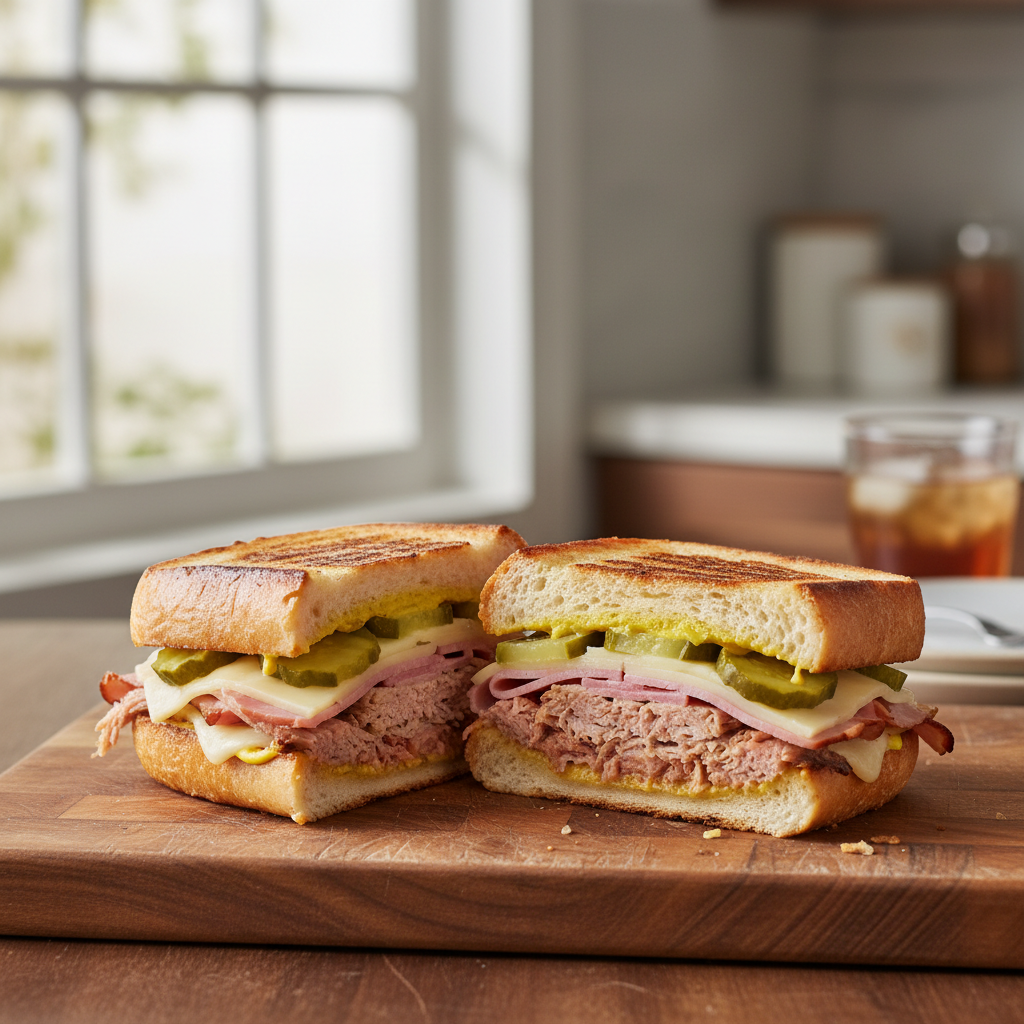
What makes a Cuban sandwich “work” (and why pressing matters)
A Cuban sandwich isn’t just a hot ham-and-cheese with pickles. The press does two jobs at once: it creates a crackly crust, and it fuses the interior so you get clean layers instead of a stack that shifts around.
- Heat melts Swiss and warms the pork and ham evenly.
- Pressure compresses the crumb so the bread turns crisp instead of drying out.
- Time lets mustard, fat, and cheese mingle without turning the bottom into a steam bath.
There’s also a regional note worth acknowledging. Miami-style often leans into Cuban bread and classic pork/ham/Swiss/pickle/mustard, while Tampa versions sometimes add salami. Both are popular; this recipe stays closer to the common Miami baseline, with an optional Tampa twist later.
Ingredients and smart substitutions (U.S. grocery friendly)
For most home cooks, the hardest part is bread and roast pork. Don’t let that stall you, the goal is the right balance of crunch, salt, tang, and porky richness.
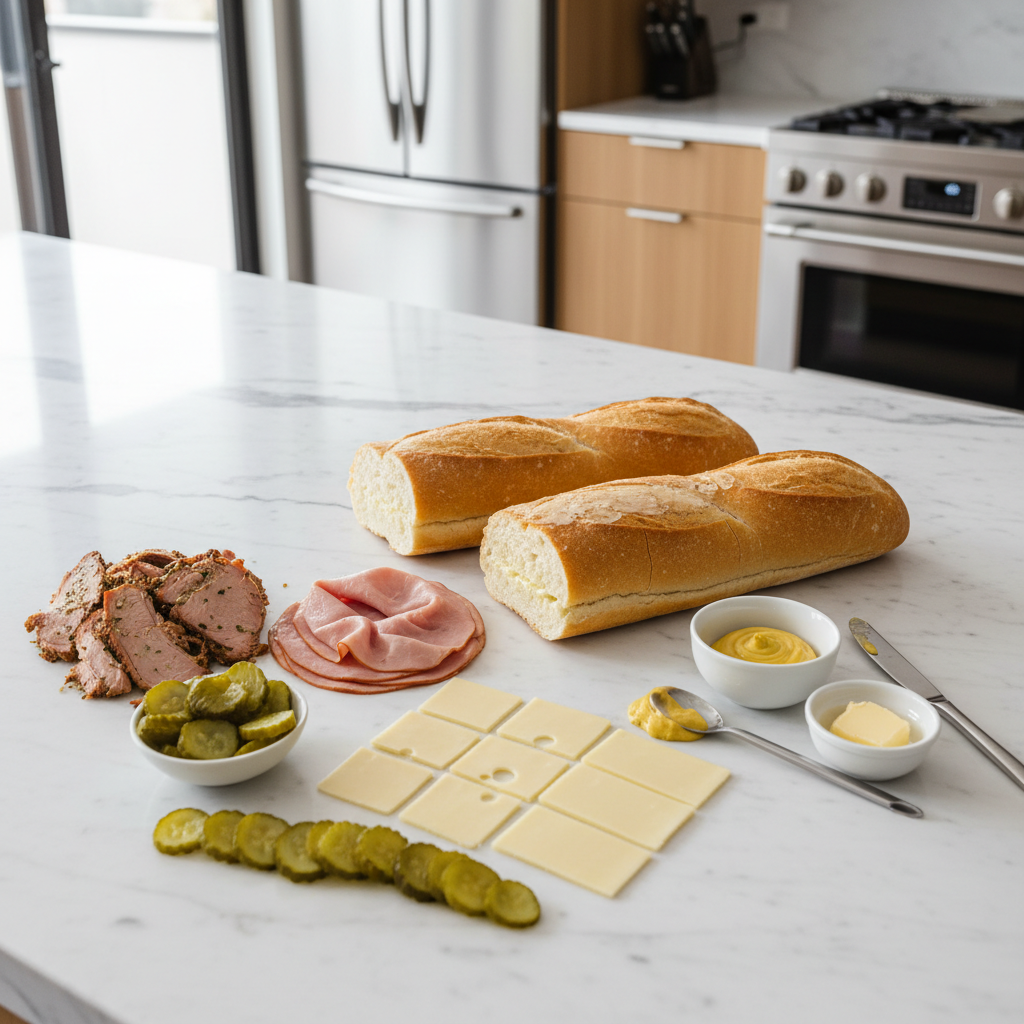
Core ingredients (2 sandwiches)
- 2 Cuban rolls (or 1 long Cuban loaf cut in half lengthwise)
- 6–8 oz roast pork, sliced or pulled (mojo-style is ideal)
- 4–6 oz ham, thin sliced
- 4 slices Swiss cheese
- Dill pickle slices (the “snap” matters)
- Yellow mustard (simple, sharp)
- Softened butter (or mayo) for the exterior
Bread substitution table
According to the USDA FoodData Central, breads vary widely in moisture and density, which is a polite way of saying some loaves steam and collapse when pressed. Use this table to pick a realistic option.
| Best option | Works because | Watch out for |
|---|---|---|
| Cuban bread/rolls | Light crumb, crisps quickly under pressure | Can be hard to find outside major metros |
| Soft French bread (not airy baguette) | Similar shape, decent crust development | Very crusty loaves can crack instead of compress |
| Bolillo rolls | Pressable and common in many stores | Some are dense, pre-warm slightly to help |
| Panini bread/ciabatta | Crisps well, holds filling | Not “classic” and may feel too chewy |
The pressing setup: you have more options than a panini press
You can make a solid cuban sandwich recipe with a panini press, but plenty of people don’t own one, and that’s fine. What you need is even weight and steady heat.
3 press methods that work at home
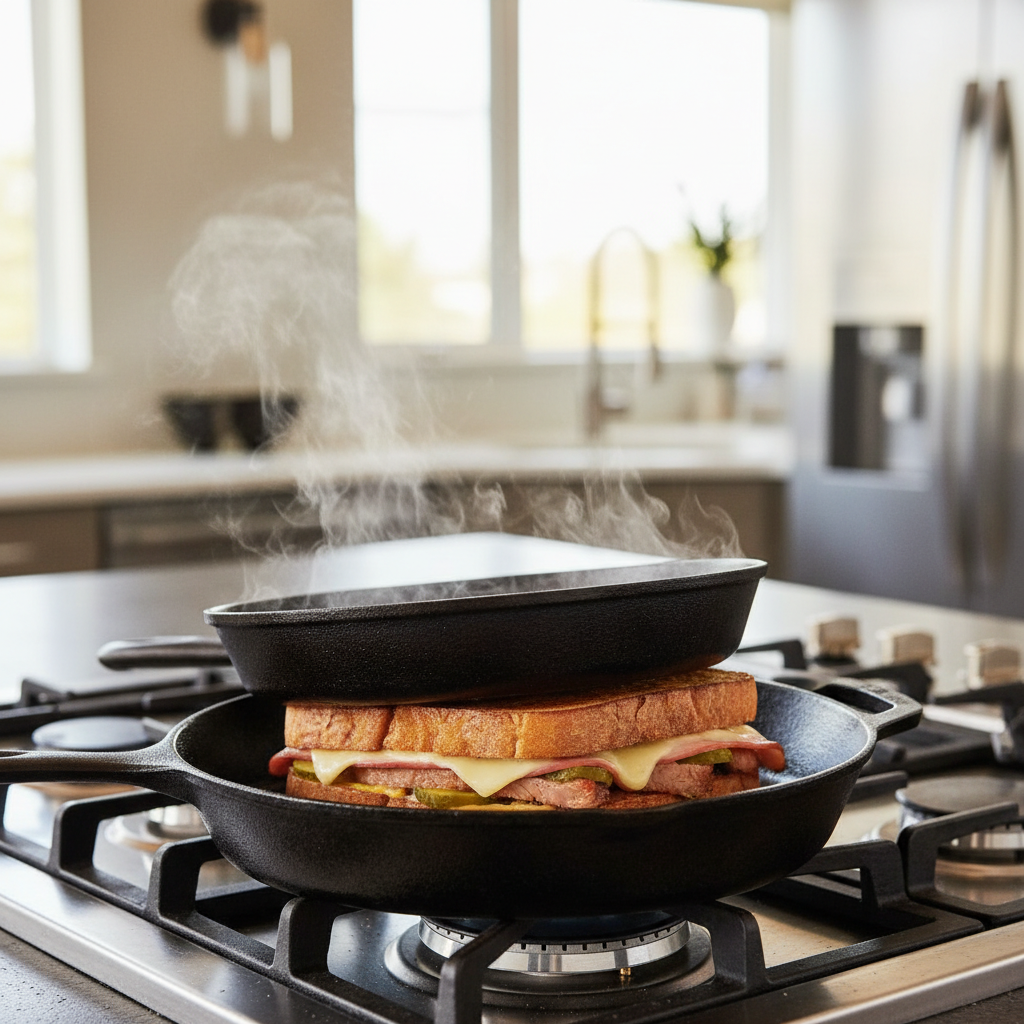
- Cast-iron skillet + second skillet: cook in one, place another heavy skillet on top as the press.
- Skillet + foil-wrapped brick: a classic workaround, stable and surprisingly effective.
- Panini press: fastest and consistent, but still avoid overstuffing.
Safety note: If you use a brick or any weight, wrap it tightly in foil and keep it away from open flame, and don’t use anything that could shed paint, rust, or debris.
Step-by-step Cuban sandwich recipe (with timing you can trust)
This is the part most recipes rush. Don’t. A good press is a small, controlled cook, not a smash-and-burn sprint.
1) Warm the fillings first (recommended)
Cold pork is one reason sandwiches stay pale while the outside over-browns. Warm roast pork and ham in a skillet for 1–2 minutes, just until steamy, then pull off heat.
2) Build the sandwich in the right order
- Slice bread lengthwise, keep a hinge if possible.
- Spread mustard on both cut sides, not a thick layer, just even coverage.
- Add Swiss on the bottom, then ham, then roast pork, then pickles, then another layer of Swiss on top.
The cheese on both sides acts like glue, which helps a lot when you press and slice.
3) Butter the outside, then press low and slow
- Lightly butter (or mayo) the exterior of the bread.
- Heat skillet to medium or medium-low. If it’s smoking, it’s too hot.
- Place sandwich in pan, add your press weight.
- Press 4–6 minutes per side, flipping carefully, until deep golden and the cheese fully melts.
Pull it, rest 60–90 seconds, then slice. That short rest keeps the layers from sliding out the moment you cut.
Quick self-check: why your Cuban sandwich keeps missing the mark
If you’re tweaking this cuban sandwich recipe and still not happy, use this checklist to pinpoint the failure point fast.
- Bread goes soggy: heat too low, fillings too wet, or too many pickles piled in one spot.
- Outside browns but inside stays cool: fillings started cold, heat too high, or sandwich too thick.
- Layers slide out: no cheese “glue” near both bread faces, or you sliced immediately after pressing.
- Too salty: ham + pork combo can spike salt, use a milder ham or add a few more pickles for balance.
- No crunch: not enough pressure, or bread choice too dense/too soft for pressing.
Practical upgrades (without turning it into a different sandwich)
Once your press method feels consistent, small tweaks make a big difference, but there’s a line between “better” and “not Cuban anymore.” Here are upgrades that usually stay in bounds.
Flavor and texture tweaks
- Mojo-friendly pork: if your pork is plain, a light brush of mojo or citrus-garlic juices can help, but go easy to avoid sogginess.
- Pickles with bite: thin slices distribute tang better than thick chips.
- Mustard coverage: spread edge-to-edge so every bite gets a little acid.
- Tampa option: add a few slices of salami, but keep the stack thin so the press still works.
Make-ahead tip
You can pre-slice meats and cheese, and even pre-build the sandwich, then wrap and refrigerate for a few hours. Press straight from the fridge can work, but you may need an extra 1–2 minutes per side and slightly lower heat to avoid scorching.
Common mistakes, food safety notes, and when to ask for help
The most common mistake is treating the press like a grill. High heat feels productive, but it often leads to a dark exterior and a lukewarm center.
- Don’t overload: a tall sandwich resists compression, then the bread cracks and fillings escape.
- Watch the steam: if you see lots of moisture, lower heat and extend time so water can cook off gradually.
- Handle leftovers carefully: cooked pork and ham should be stored promptly and reheated thoroughly; if you have specific health concerns, it’s reasonable to consult a qualified food safety professional.
According to the USDA Food Safety and Inspection Service (FSIS), keeping perishable foods out at room temperature for extended periods increases risk, so if you’re prepping for a party, stage ingredients cold and press sandwiches in batches.
Conclusion: a better press beats a “secret ingredient”
A reliable cuban sandwich recipe is less about hunting down one perfect product and more about getting the press right: moderate heat, real weight, and a thin, well-layered build. If you try just two changes, warm the fillings first and press longer at slightly lower heat, most home versions jump from “fine” to genuinely craveable.
If you want an easy next step, run one test sandwich and take notes on timing and browning in your own pan, then repeat with the same setup. Consistency is what makes this sandwich feel like the real thing.
FAQ
What bread is closest to Cuban bread if I can’t find it?
Soft French bread or bolillo rolls tend to press well and still crisp. Avoid very hard-crust baguettes, they can shatter rather than compress.
Can I make a Cuban sandwich without a panini press?
Yes. A cast-iron skillet plus another heavy skillet (or a foil-wrapped brick) usually gives enough pressure, as long as you keep heat moderate and press for time, not speed.
Why did my sandwich turn soggy instead of crispy?
Often it’s moisture plus low heat. Too much pickle juice, very wet pork, or piling pickles in one spot can trap steam, and the bread never dries and crisps under pressure.
Is mayo okay instead of butter on the outside?
In many kitchens, yes. Mayo browns nicely and spreads easily; butter tastes more traditional to some people. Either works if you use a thin layer.
Should I use yellow mustard or Dijon?
Yellow mustard is the classic move and keeps the flavor bright without taking over. Dijon can work if you like it, but it may shift the balance toward sharp and peppery.
Can I use leftover pork roast for this?
Usually yes, especially if it’s tender and not too heavily sauced. Warm it briefly before building so the press can focus on crisping, not trying to heat a cold center.
How do I keep the fillings from sliding out when I cut it?
Use Swiss on both sides, press long enough for the cheese to fully melt, then rest the sandwich a minute before slicing so it sets slightly.
Key takeaways: Keep the stack thin, warm the fillings, spread mustard evenly, and press with steady weight over medium or medium-low heat until the bread turns deep golden and the cheese binds everything together.