
how to make khandvi recipe gujarati is mostly about controlling two things people underestimate, batter thickness and heat timing, once those click, the rolls come out silky instead of gummy or cracked.
If you have ever tried khandvi and ended up with a paste that refuses to set, or a sheet that tears when you roll, you are not alone, this snack looks delicate because it is, and small shifts in stirring, pan choice, or measurement can swing the result.
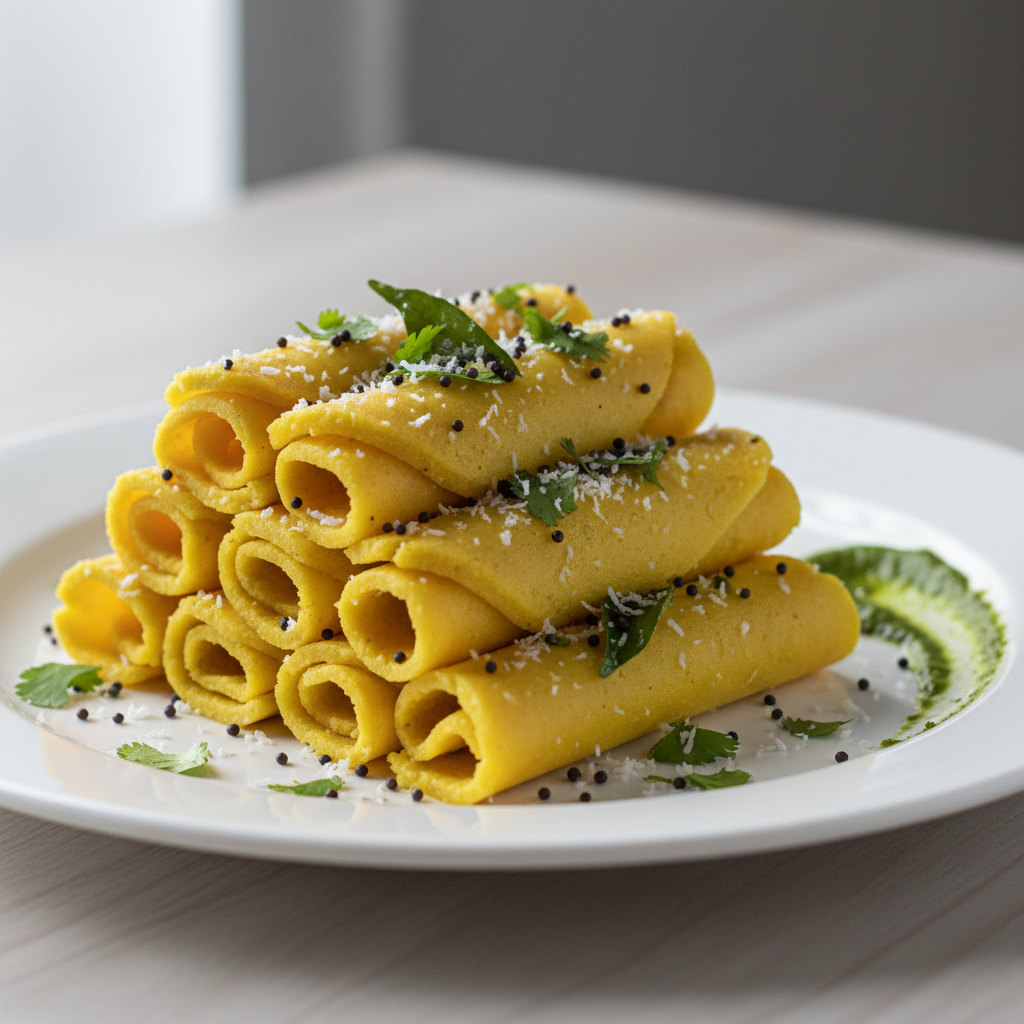
This guide keeps it practical for a U.S. kitchen, what to buy at an Indian store, how to substitute if you cannot find something, and how to troubleshoot when the batter looks “wrong” even though you followed a recipe.
Key takeaways: measure by weight when possible, cook until the batter turns glossy and pulls from the pan, spread thin fast, and temper right before serving so the aroma stays bright.
What “Gujarati khandvi” is, and why it can be finicky
Khandvi is a steamed-style savory snack made from besan (chickpea flour) and yogurt, cooked into a smooth batter, spread into thin sheets, then rolled and topped with a spiced oil tempering.
The finicky part is texture, you need a batter that sets into a flexible sheet, not a brittle one, not a pudding. That depends on besan quality, yogurt acidity, and how evenly you cook while stirring.
- Besan: finer flour usually yields smoother sheets, older flour can taste a bit flat or turn grainy.
- Yogurt: thicker yogurt often needs a splash more water, very tangy yogurt can make flavor sharper.
- Heat: too high and the batter turns lumpy fast, too low and it stays loose and never reaches the “sheet-setting” stage.
Ingredients and smart substitutions for U.S. kitchens
You can find most items at an Indian grocery, but you do not need a huge spice cabinet to get a very “Gujarati” profile.
Core ingredients
- Besan (chickpea flour): use fine besan if available.
- Plain yogurt: full-fat gives a rounder taste, low-fat still works.
- Water: needed for the right pouring consistency.
- Turmeric: color and mild earthiness.
- Salt
- Ginger + green chili: fresh paste or very finely grated.
For tempering (tadka)
- Neutral oil
- Black mustard seeds
- Curry leaves (fresh or frozen)
- Sesame seeds (white)
- Asafoetida (hing), optional but classic
Finishing
- Chopped cilantro
- Unsweetened shredded coconut, optional but common
- Fresh lemon juice, optional
Substitution notes: If curry leaves are hard to find, skip them rather than replacing with bay leaf, the flavor is different. If you cannot find hing, leave it out. If your besan is coarse, sift it, it helps.
Ratios that usually work: a quick reference table
People ask for “the” ratio, but brands vary. Still, a few starting points make life easier, and you can adjust on the fly.
| Batch size | Besan | Yogurt | Water | Notes |
|---|---|---|---|---|
| Small (snack for 2) | 1/2 cup (about 55–60g) | 1/2 cup | 1 cup | Good for first attempt, easier to spread quickly |
| Medium (4 people) | 1 cup (about 110–120g) | 1 cup | 2 cups | Most common home batch |
| Thicker yogurt adjustment | Same | Same | +2–4 Tbsp | Add only if batter feels too thick before cooking |
Flavor baseline: per 1 cup besan, plan on 1 to 1 1/2 tsp salt, 1 tsp turmeric, and 1 to 2 tsp ginger-chili paste, then tune after your first batch.
How to make khandvi recipe gujarati: step-by-step method
This is the method most likely to give you a clean sheet without drama, set up your workspace before turning on heat, because once the batter hits the right stage you move fast.
1) Prep your spreading surface
- Use the back of a sheet pan, a large cutting board, or a clean granite counter.
- Lightly grease with a few drops of oil and wipe thin.
- Keep an offset spatula or silicone spatula ready.
2) Mix a lump-free batter (before cooking)
- In a bowl, whisk besan, yogurt, water, turmeric, salt, and ginger-chili paste.
- Strain through a fine mesh sieve into a saucepan if you want extra insurance.
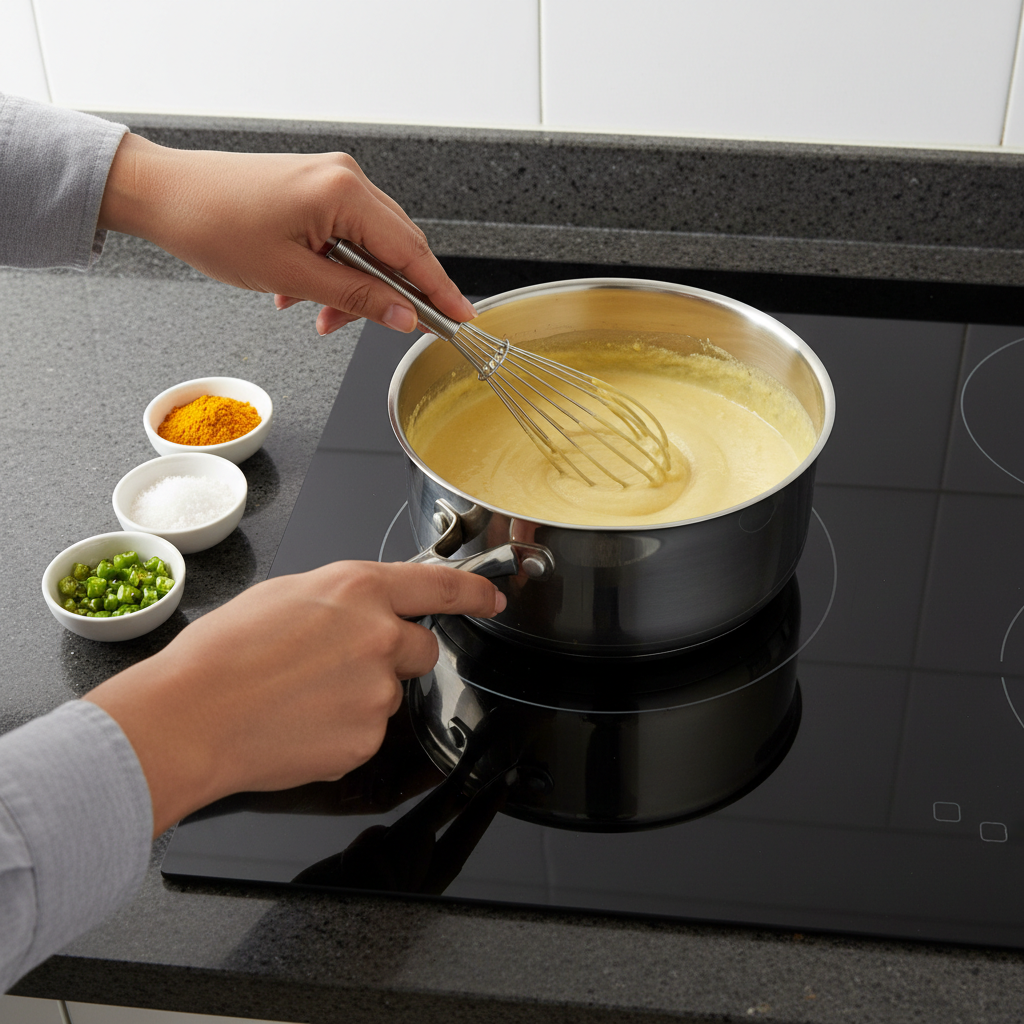
3) Cook while stirring, until the batter turns glossy and thick
- Set heat to medium, stir constantly with a silicone spatula, scraping corners.
- In many cases it thickens in 6 to 10 minutes, but stovetops vary.
- Look for: batter coating the spatula, surface looks glossy, and it pulls slightly from the pan.
Micro-test: drop a small spoonful on your greased surface, wait 30 to 45 seconds, then try to lift, if it peels and feels flexible, you are ready. If it stays wet, cook another minute and test again.
4) Spread thin, fast, and do not overwork it
- Pour batter onto the surface in 2 to 3 ribbons.
- Use quick strokes to spread into a thin layer, aim for even thickness.
- Let it cool and set for 3 to 5 minutes.
5) Cut and roll
- Use a knife or pizza cutter to slice 1 to 1.5 inch strips.
- Roll gently, if it tears, it may be too thick, too thin, or undercooked.
- Transfer rolls to a plate seam-side down.
If you want the rolls to look tidy, trim uneven edges before cutting strips, it feels extra, but it helps presentation a lot.
Tempering and finishing: where the “Gujarati” aroma comes from
The batter is mild, the tempering is where the personality lives. Add tadka when rolls are ready so they do not sit in hot oil too long.
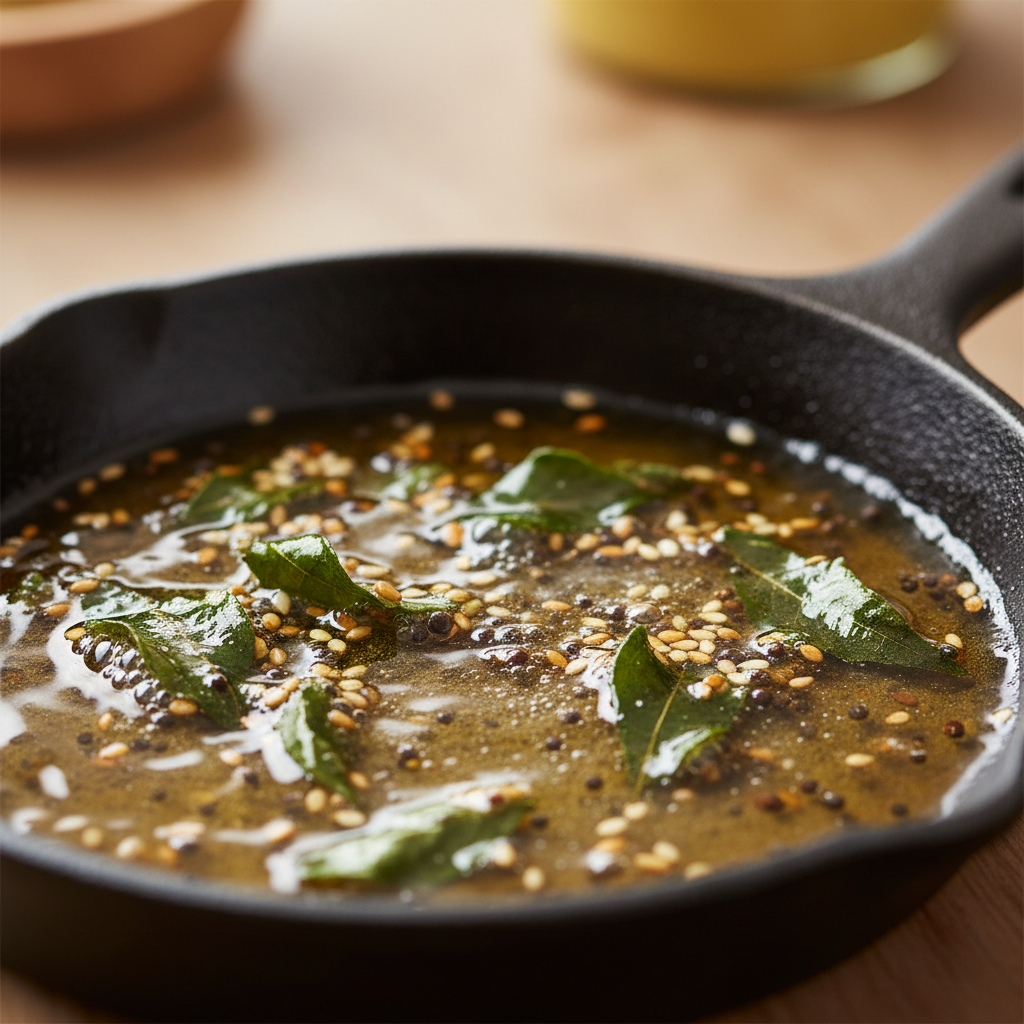
Quick tadka
- Heat 2 to 3 Tbsp oil in a small pan.
- Add mustard seeds, when they crackle add sesame seeds and curry leaves.
- Add a pinch of hing if using, then turn heat off.
- Spoon over rolls, then finish with cilantro and coconut.
Optional finish: a light squeeze of lemon wakes everything up, but if your yogurt is already tangy you might skip it.
According to USDA FoodData Central, chickpea flour is a legume-based ingredient that contributes protein and fiber, but nutrition can vary by brand and serving size, so treat labels as your best guide.
Self-check checklist: what your batter is telling you
When people search how to make khandvi recipe gujarati, they usually hit one of these three issues, here is a quick way to diagnose without guessing.
- Batter turns lumpy fast: heat too high or stirring uneven, lower heat, keep scraping edges, whisking before cooking also helps.
- Sheet never sets: undercooked batter or too much water, keep cooking and do the spoon test until it peels.
- Sheet sets but cracks while rolling: batter cooked too long or spread too thin, next time stop cooking slightly earlier, or spread a touch thicker.
- Rolls feel gummy: sheet too thick or batter slightly undercooked, increase spreading speed and test readiness.
- Bitter taste: besan can taste bitter if old or overheated, fresh flour and moderate heat usually fix it.
Quick reality check: if your first batch is “ugly but tasty,” you are close, khandvi is more about repetition than secret ingredients.
Practical tips for U.S. equipment and timing
Traditional setups vary, but you can make this comfortably with what many American kitchens already have.
- Use a nonstick or heavy-bottom saucepan: it reduces scorching and buys you a little time.
- Silicone spatula beats a spoon: corners matter, stuck batter turns grainy.
- Sheet pan back works well: it spreads heat away and gives a large flat surface.
- Do not multitask during thickening: that 1 minute you check your phone is when lumps form.
- Make-ahead: you can roll ahead and temper right before serving, the rolls hold for a few hours covered.
If you plan to pack it for lunch, keep tadka separate in a small container, then spoon over later, the texture stays cleaner.
Common mistakes and how to avoid wasting a batch
There is a reason many home cooks avoid this snack, the good news is most “failed” batter can be repurposed.
- Spreading too slowly: batter sets as it cools, so spread immediately, if it thickens mid-spread, it will look patchy and tear later.
- Skipping the peel test: recipes give minutes, your stove gives reality, test and trust the texture.
- Overcooking: you will smell a stronger roasted note and see the batter tighten hard, stop earlier next time.
- Trying to fix lumps late: once lumps form, they rarely disappear, strain early, and keep heat moderate.
If the sheet fails: cut the set batter into small pieces, temper and toss like a warm savory snack, not traditional khandvi, but still very edible.
Conclusion: a calm way to get consistent khandvi
how to make khandvi recipe gujarati becomes predictable once you treat it like a timing recipe, not just an ingredient list, cook to the glossy, peelable stage, spread thin without fussing, then finish with fresh tempering so the flavors pop.
If you want one action to take today, do the spoon test twice during cooking and keep your spreading surface ready before heat goes on, that single habit prevents most frustration and gets you closer to the smooth rolls you see at Gujarati snack shops.