
how to make popcorn salty buttery comes down to two things people usually fight with, butter that turns the bowl soggy, and salt that falls to the bottom instead of sticking.
If you have ever poured melted butter on top, tossed a bit, and still ended up with dry popcorn plus a puddle at the end, you are not doing anything “wrong”, you are just missing a small technique shift. The same goes for salt, the grain size matters more than most recipes admit.
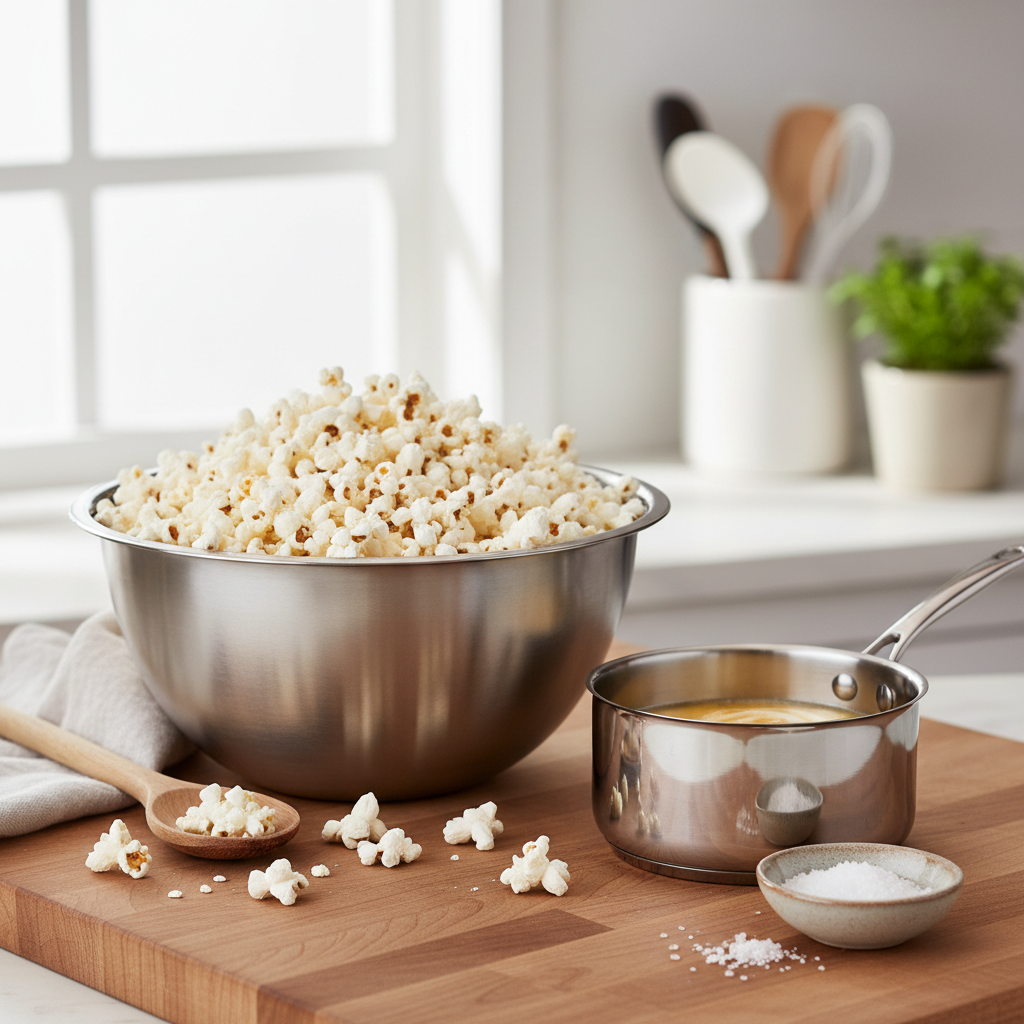
This guide stays practical, you will get a simple method, a few smart variations, and a quick troubleshooting section for the common “why is mine bland or wet” moments. No fancy gear required, but I will call out when a tool actually helps.
What makes salty buttery popcorn actually taste “movie-theater”
People often assume theaters use a secret ingredient. In reality, the experience usually comes from texture control and seasoning adhesion, plus a butter-flavored fat that spreads easily.
- Even fat coverage so every bite carries flavor, not just the top layer.
- Salt that can stick, usually a very fine grind, sometimes called popcorn salt.
- Heat timing, adding fat at the right moment so it coats without soaking.
- Enough fat to carry flavor, but not so much that it puddles.
According to USDA Food Safety and Inspection Service, melted butter and cooked foods should not sit at room temperature for long periods, so if you are serving for a crowd, plan to season, toss, and serve fairly soon rather than letting it linger on the counter.
Ingredients and gear (with realistic substitutions)
You can make great popcorn with a microwave bag, an air popper, or a pot on the stove. The seasoning technique matters more than the popping method, though stove popping gives you the most control.
Core ingredients
- Popcorn kernels or plain popped popcorn
- Butter, unsalted gives you control, salted works if you adjust
- Salt, ideally very fine
Helpful add-ons (optional)
- Neutral oil like avocado or canola, helps “stretch” butter flavor without drowning popcorn
- Butter-flavored oil or ghee, often less watery than butter
- Powdered seasoning like nutritional yeast, ranch powder, or chili-lime
Gear that makes life easier
- Large mixing bowl with room to toss
- Small saucepan or microwave-safe cup for butter
- Fine-mesh strainer or spice grinder for making salt finer
- Paper bag or lidded bowl for shaking, if you prefer less mess
Pick your salt: why grain size changes everything
If your popcorn tastes buttery but not salty, it is rarely because you did not use enough salt, it is because the salt crystals are too big to cling. That is the moment people keep adding salt and still feel disappointed.
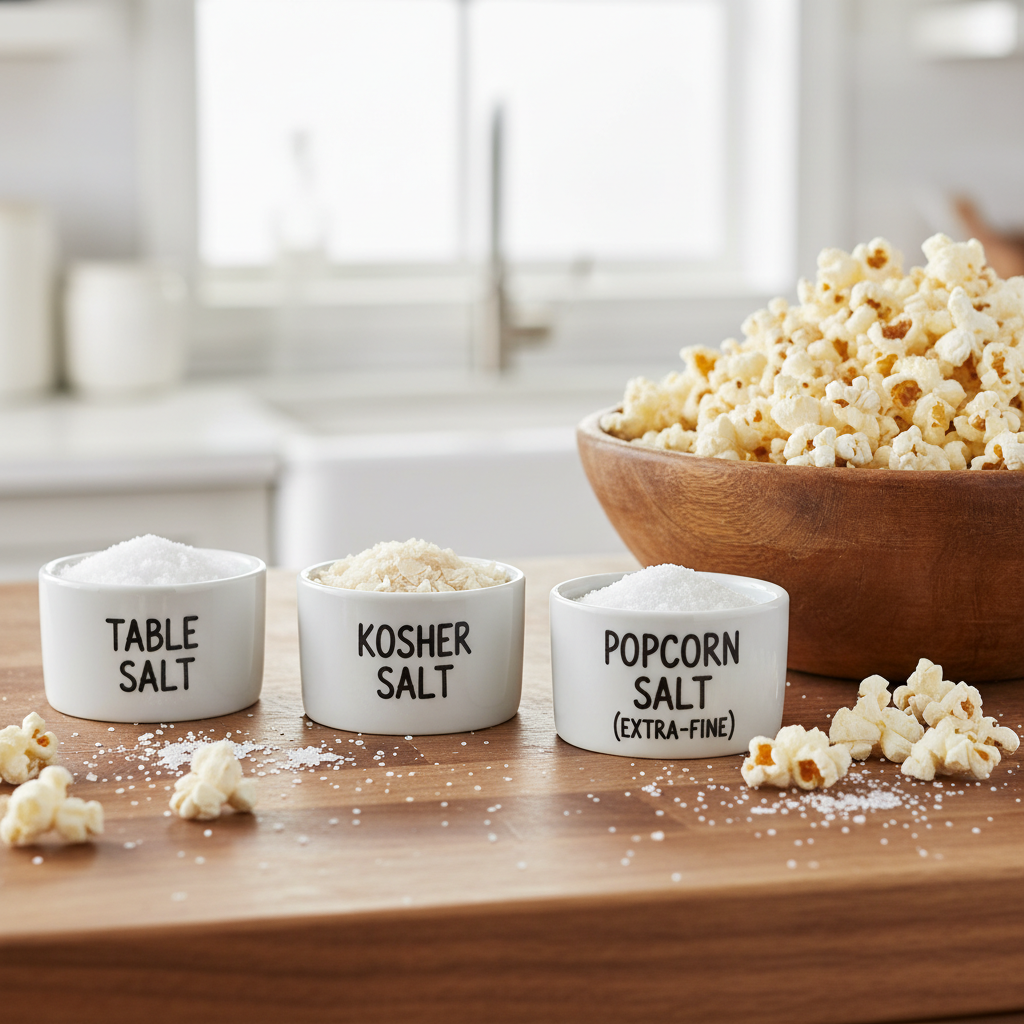
Here is the practical rule set.
- Popcorn salt (extra-fine): sticks best, fastest “theater” vibe.
- Table salt: usually fine enough, a good default at home.
- Kosher salt: great for cooking, often too coarse for popcorn unless you grind it.
- Flaky salt: tasty on some foods, but tends to fall off popcorn and waste your effort.
Easy hack, if you only have kosher salt, pulse it in a spice grinder for a few seconds, or crush it in a mortar. Store extra in a small jar as your DIY popcorn salt.
The main method: buttery flavor, crisp popcorn, salt that sticks
This is the version most people end up keeping, because it fixes the two big issues without turning it into a science project. The move is “butter in a thin stream + salt in layers”.
Step-by-step
- Pop 10–12 cups of popcorn, keep it plain and hot.
- Melt 3–4 tbsp butter gently. If it starts to sizzle hard, it is too hot and can taste a bit harsh.
- Optional but useful, stir in 1–2 tbsp neutral oil. This helps coating and reduces the “puddle” effect for many kitchens.
- Put popcorn in a large bowl, sprinkle a light pinch of fine salt, toss.
- Drizzle butter in a thin stream while tossing with your other hand. Do not dump it in one spot.
- Finish with another small pinch of salt, toss, taste, then adjust.
Key point: you are seasoning in passes, not doing one dramatic pour at the end. That single change is usually what people mean when they say their popcorn finally tastes “even”.
Quick self-check: why yours turns soggy or bland
If your results feel inconsistent, run this quick checklist before changing everything at once.
- Popcorn feels chewy within minutes: butter is too watery, poured too fast, or popcorn cooled too much before seasoning.
- Salty at the bottom, bland on top: salt too coarse, or you salted after butter pooled.
- Greasy mouthfeel: too much fat for the amount of popcorn, or not enough tossing.
- Great flavor but no crunch: steam trapped in the bowl, especially with lidded containers.
- Butter flavor disappears: butter amount too low, or you used clarified butter substitute with less dairy aroma, which happens with some products.
Adjust by scenario: microwave, air popper, or stovetop
The seasoning technique stays the same, but the “best moment” to add fat changes a little based on how dry and hot your popcorn is.
Microwave popcorn (plain or lightly buttered)
- If the bag already has butter flavor, go lighter on melted butter, start with 1–2 tbsp and taste.
- Use fine salt, add in layers, because microwave popcorn cools fast.
- If it seems stale, spread popcorn on a sheet pan for 2–3 minutes before seasoning, it can help release trapped steam.
Air-popped popcorn
- Air-popped popcorn is dry, which is great for crunch but can make seasoning bounce off.
- Use the thin-stream drizzle, and consider the butter-plus-oil blend for better coverage.
Stovetop popcorn
- Stovetop batches often come out hotter, which helps butter spread.
- Drain any visible excess oil before you add butter, or the flavors can get muddy.
Flavor variations that still stay salty and buttery
Once you nail how to make popcorn salty buttery, it becomes easy to add personality without losing the core “buttery-salty” bite. Keep powders fine, and add them the same way as salt, in light passes.
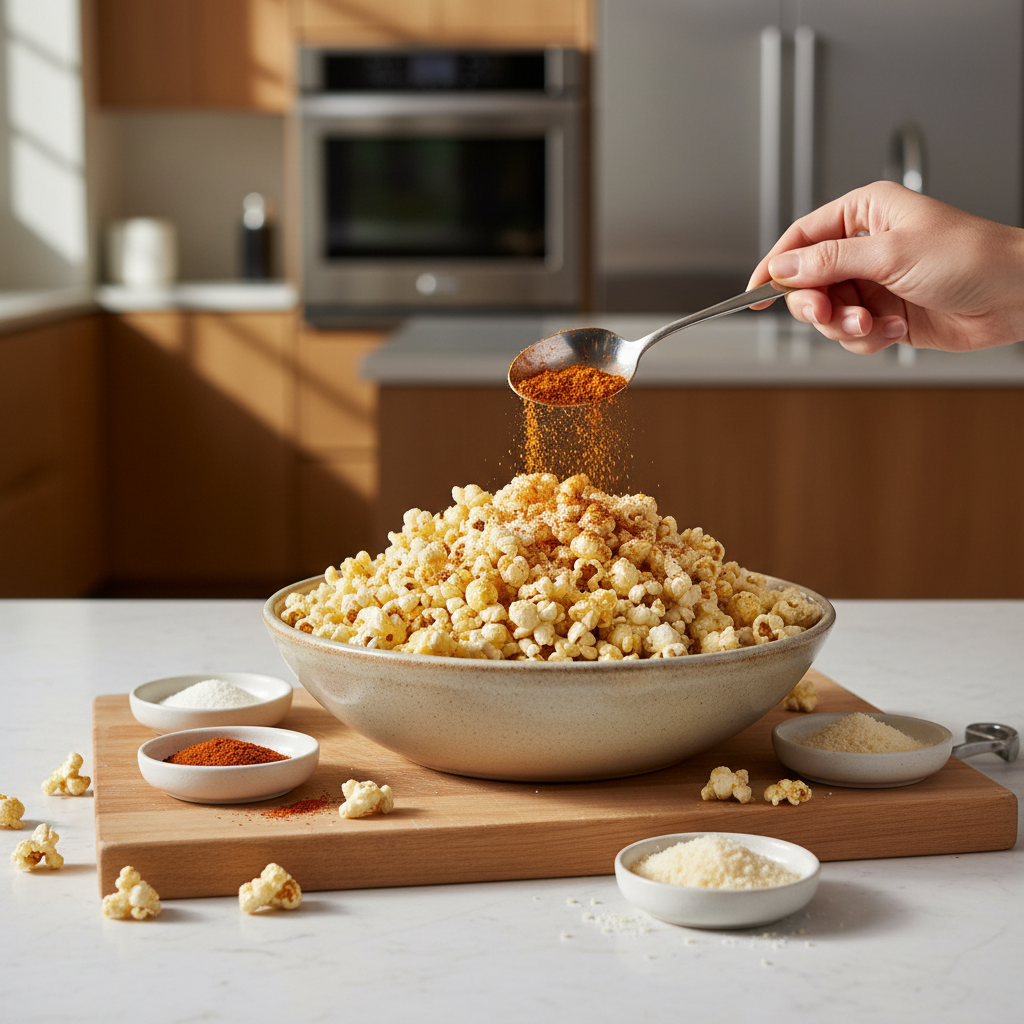
- Garlic butter popcorn: add a pinch of garlic powder to the salt, go easy, it can dominate fast.
- Parmesan butter popcorn: toss with finely grated parmesan right after butter, then salt only if needed.
- Spicy buttery popcorn: cayenne or chipotle powder plus fine salt, start tiny and build.
- Herb butter popcorn: dried dill or parsley works better than fresh for sticking.
If you use sweet add-ins like kettle corn style sugar, keep them separate from buttery batches, sugar plus butter can burn or clump depending on heat and timing.
Butter options compared (table)
Butter is not one thing in practice, water content and flavor intensity can shift the outcome. This table helps you pick based on what you care about.
| Option | Flavor | Crunch risk | When it makes sense |
|---|---|---|---|
| Regular melted butter | Classic dairy aroma | Medium, more water | Most home batches, especially if you drizzle and toss |
| Clarified butter or ghee | Clean, rich, less milky | Lower, less water | When you hate soggy popcorn or want better keep time |
| Butter + neutral oil blend | Buttery, slightly lighter | Low to medium | Big bowls, easier even coating |
| Butter-flavored oil | “Theater-style” vibe | Low | When you want that concession-stand profile, check ingredients if you have sensitivities |
Common mistakes (and the small fixes)
- Dumping butter in one spot: drizzle while tossing, or use a spoon to flick it across the bowl.
- Seasoning once, at the end: do two or three light passes, it tastes more even with less salt.
- Using coarse salt and calling it a day: grind it finer, this is the “why does it not taste right” culprit.
- Covering hot popcorn tightly: steam softens it, vent the bowl or keep the lid cracked.
- Overheating butter: scorched notes show up quickly, warm and melted is enough.
On food safety, if you are holding popcorn out for a party, keep an eye on how long buttered foods sit unrefrigerated. According to FDA, perishable foods should not stay in the “danger zone” of temperatures for extended periods, and while popcorn itself is low risk, buttery toppings can raise concern in some situations, when in doubt, serve smaller fresh batches.
Practical wrap-up: a simple way to make it repeatable
If you want this to feel effortless, keep a small jar of extra-fine salt on hand, use the thin-stream butter drizzle, and season in layers while the popcorn stays warm. That combination is usually what turns “pretty good” into “why did I not do this sooner”.
Next time, pick one upgrade only, maybe grind your salt, or swap to ghee, then compare results. Small changes are easier to trust, and you will land on your own ideal salty-buttery balance fast.