
If you’re searching for how to make icing for cake sugar, the good news is it’s basically a smart mix of powdered sugar, a liquid, and a little patience while you adjust the texture.
What usually trips people up is not the “recipe,” it’s consistency: too thick and it tears cake, too thin and it slides right off. In this guide, you’ll get an easy base formula, quick texture fixes, and a few variations that still feel simple.
One quick note before you start: “sugar icing” in the U.S. usually means a powdered-sugar glaze or a simple icing that sets, not a fluffy buttercream. It’s ideal for bundt cakes, loaf cakes, donuts, cookies, and quick birthday cakes when you want a clean finish without a piping bag.
What “simple sugar icing” is (and what it’s best for)
Simple sugar icing is a smooth mixture that drizzles, coats, and sets. It dries into a thin shell on top, which makes cakes look finished fast.
- Best uses: loaf cakes, bundt cakes, coffee cake, pound cake, quick sheet cakes, cinnamon rolls
- Not ideal for: tall layer cakes that need thick structure, or detailed piping that must hold shape
- Set time: varies by humidity and thickness, often 15–60 minutes for a skin to form
According to USDA, powdered sugar is a shelf-stable dry product when stored sealed and dry, so the real safety factor usually comes from whatever liquid you add, especially dairy. When in doubt, refrigerate leftovers and use common sense about time at room temperature.
The base recipe: a reliable ratio you can actually remember
Most “why does my icing look wrong” moments come from eyeballing too aggressively. Start with a base, then adjust.
Simple sugar icing (glaze-style)
- Powdered sugar: 1 cup (120g), sifted if lumpy
- Liquid: 1.5 to 2.5 tablespoons milk, water, or lemon juice
- Flavor: 1/4 teaspoon vanilla (optional)
- Salt: a tiny pinch (optional, helps sweetness taste less flat)
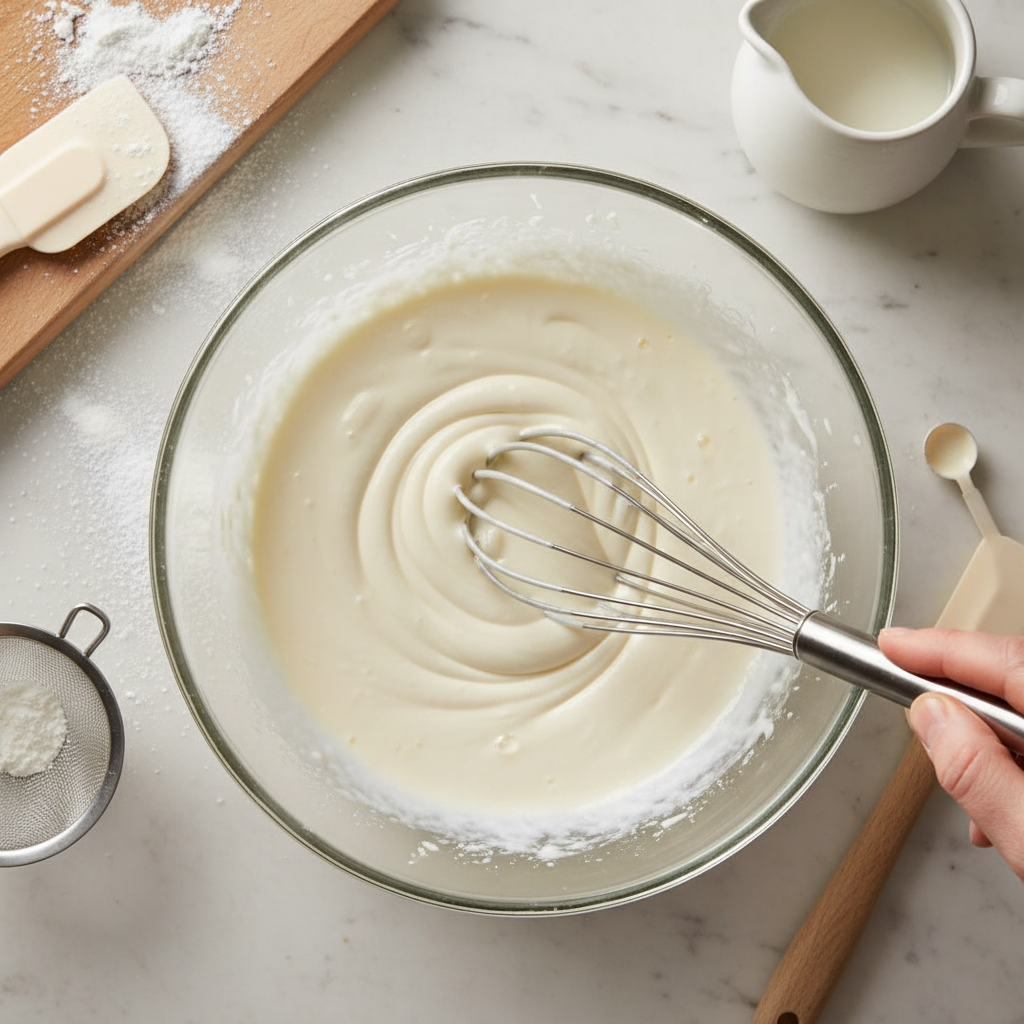
Mix powdered sugar with 1.5 tablespoons liquid first, then add by the teaspoon until it pours the way you want. The whisk should leave ribbons that disappear back into the bowl after a few seconds.
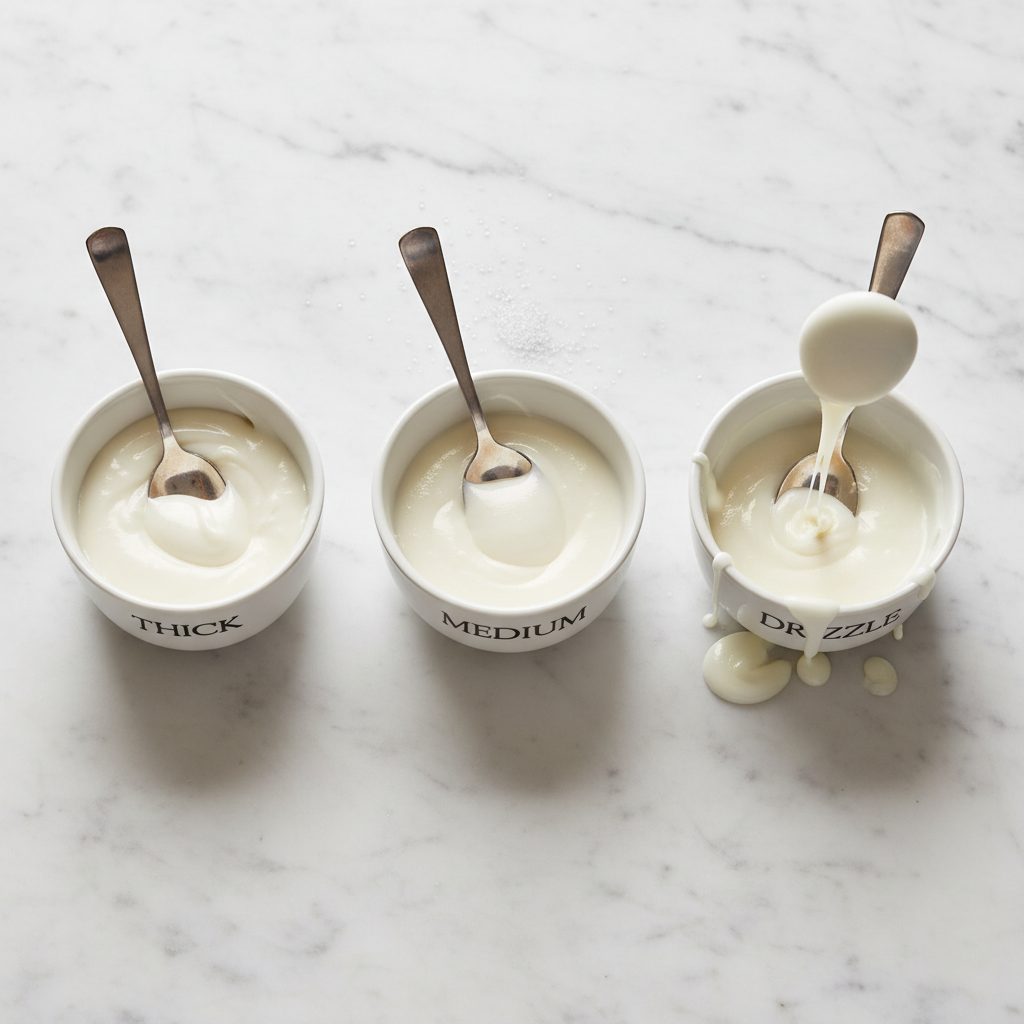
Consistency guide: thick, medium, or drizzle (use this table)
Pick the finish first, then mix to match. This saves you from adding too much liquid and chasing the texture.
| Finish | Best for | How it should look | Typical liquid per 1 cup sugar |
|---|---|---|---|
| Thick spreadable | Small cakes, “opaque” top coat | Slow ribbons, barely pourable | ~1 to 1.5 tbsp |
| Medium glaze | Bundt/loaf cakes, neat drip edges | Ribbons melt back in 3–5 seconds | ~1.5 to 2.5 tbsp |
| Drizzle | Donuts, cookies, quick decorative lines | Flows easily off spoon | ~2.5 to 3.5 tbsp |
Humidity matters more than people expect. On a humid day, you often need a touch more powdered sugar for the same look.
Step-by-step: how to make sugar icing smooth (no lumps)
This is the method that tends to work even when your powdered sugar has been sitting around.
- Start with a bowl and whisk, not a spoon, whisk breaks clumps faster.
- Sift the powdered sugar if you see hard bits. If you don’t have a sifter, a fine-mesh strainer works.
- Add liquid gradually and whisk 20–30 seconds before deciding it’s “too thick.”
- Rest 2 minutes, then whisk again. Tiny bubbles settle, texture often turns smoother.
- Taste and tweak: a pinch of salt or a few drops of lemon can balance sweetness.
If you want this to set with a clean finish, avoid overloading with fat. Milk is fine, but heavy cream plus lots of vanilla can slow setting a bit.
Quick fixes: too runny, too thick, gritty, or cracking
When people re-search how to make icing for cake sugar, it’s often because something went sideways mid-bowl. Here are the practical saves.
If it’s too runny
- Add powdered sugar 1 tablespoon at a time, whisk well each time.
- Wait 2 minutes before adding more, it thickens slightly as sugar hydrates.
If it’s too thick
- Add liquid 1 teaspoon at a time, whisk fully.
- If you used lemon juice and it feels harsh, switch to milk/water for the next teaspoon.
If it feels gritty
- Keep whisking and rest 3–5 minutes, sugar dissolves more than you think.
- Check your powdered sugar, older sugar clumps more, sifting helps.
If it cracks after setting
- This often means it was mixed too thick. Next time, add a bit more liquid for flexibility.
- Very dry environments can cause faster setting; a slightly thinner glaze reduces cracking risk.
Flavor variations that still count as “simple”
You can keep the same technique and swap the liquid for an easy upgrade. Just remember: stronger acids and darker liquids may tint the icing.
- Lemon icing: replace milk with lemon juice, add zest if you like texture.
- Vanilla-almond: half vanilla, a few drops almond extract (go easy, it’s strong).
- Coffee glaze: use cooled strong coffee or espresso instead of milk.
- Cocoa sugar icing: replace 2 tablespoons powdered sugar with cocoa, then add liquid slowly.
According to FDA, food allergens like milk matter even in small amounts, so if you serve guests, label dairy-based icing clearly or use water/citrus instead.
Application tips: getting a clean look on real cakes
Most cakes look better when you glaze at the right temperature, not necessarily “as soon as it’s baked.”
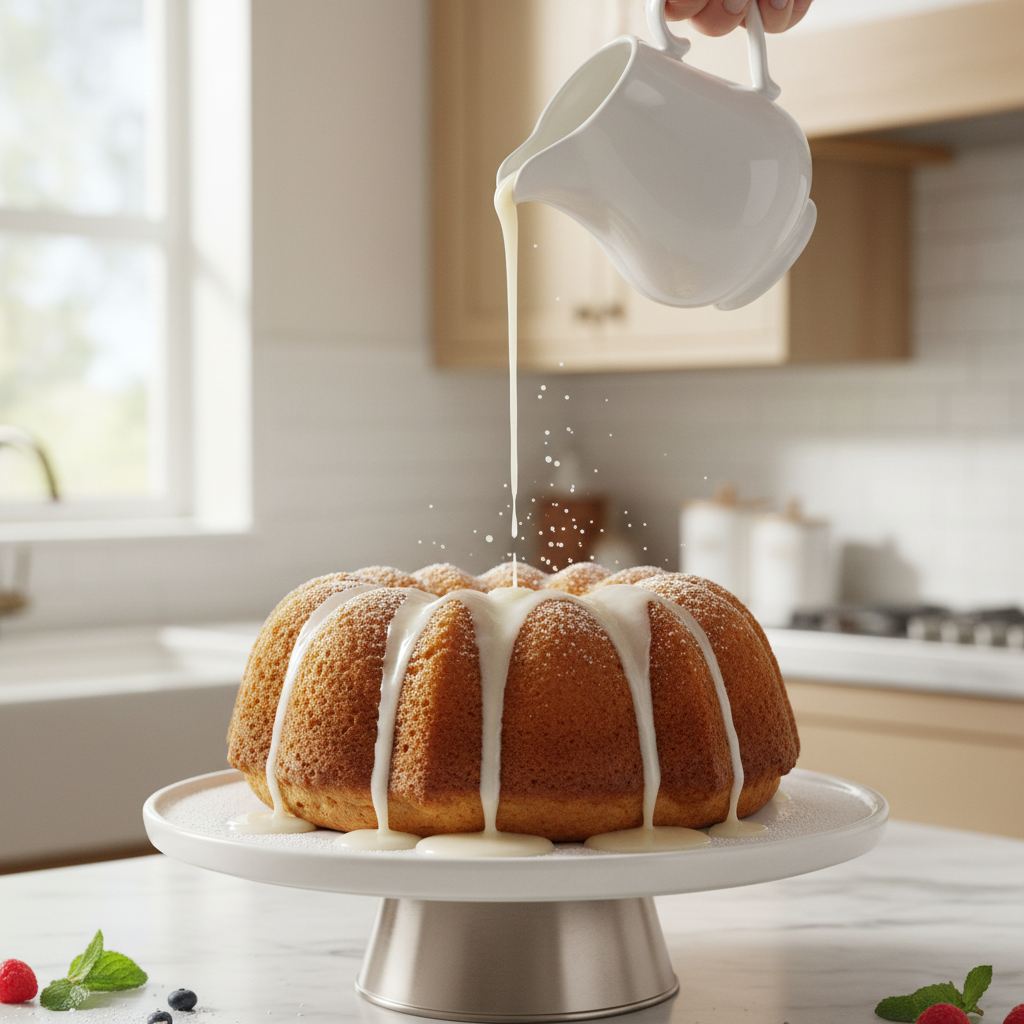
- For a neat drip edge: let cake cool 10–20 minutes, warm but not hot, then pour medium glaze.
- For a fully white top: cool cake more, use thicker icing, spread with an offset spatula.
- For a translucent sheen: glaze while cake is slightly warm and keep it thinner.
- Catch drips: place cake on a rack over parchment, then spoon excess back into bowl.
Key point: if the cake is too hot, icing can melt and disappear; if it’s ice-cold, icing can set too fast and look patchy.
Storage, make-ahead, and when to ask for extra help
Simple sugar icing is forgiving, but it does have limits.
- Room temperature: water-based icing often holds for a day if covered, but texture can crust.
- Refrigeration: milk-based icing is usually safer chilled; bring to room temp and whisk before using.
- Make-ahead: mix, cover tightly, press plastic wrap onto surface to reduce drying.
If you’re baking for someone with dietary restrictions, a large event, or you need a finish that stays stable outdoors for hours, it may be worth consulting a pastry professional or using a tested commercial icing, since heat and humidity can be unpredictable.
Practical takeaway: a simple plan for your next cake
Once you stop treating icing like a fixed recipe and start treating it like a texture you control, it gets easy fast. Keep powdered sugar as the base, add liquid slowly, and choose the thickness that matches your cake style.
If you want a low-stress next step, measure your first batch exactly, write down the liquid amount that worked in your kitchen, and reuse that ratio. It’s the quickest way to make how to make icing for cake sugar feel automatic instead of guesswork.