
Chicken salad recipe questions usually show up for one reason: you want something quick that still tastes like a “real” lunch, not a sad bowl of mayo and shredded chicken.
This classic version stays creamy and crisp, holds up in the fridge, and works in sandwiches, wraps, lettuce cups, or straight from the bowl. I’ll also show you how to adjust it when your chicken is too dry, your mix feels flat, or you’re trying to lighten it up without losing the comfort-food vibe.
One quick note on safety because chicken salad lives in that “picnic food” zone. According to USDA Food Safety and Inspection Service (FSIS), perishable foods shouldn’t sit out longer than 2 hours, or 1 hour when it’s above 90°F, so plan your serving time accordingly.
What makes a classic chicken salad actually work
The best chicken salad isn’t complicated, it’s balanced. You’re aiming for tender chicken, a creamy binder, something crunchy, and a little acidity so it doesn’t taste heavy.
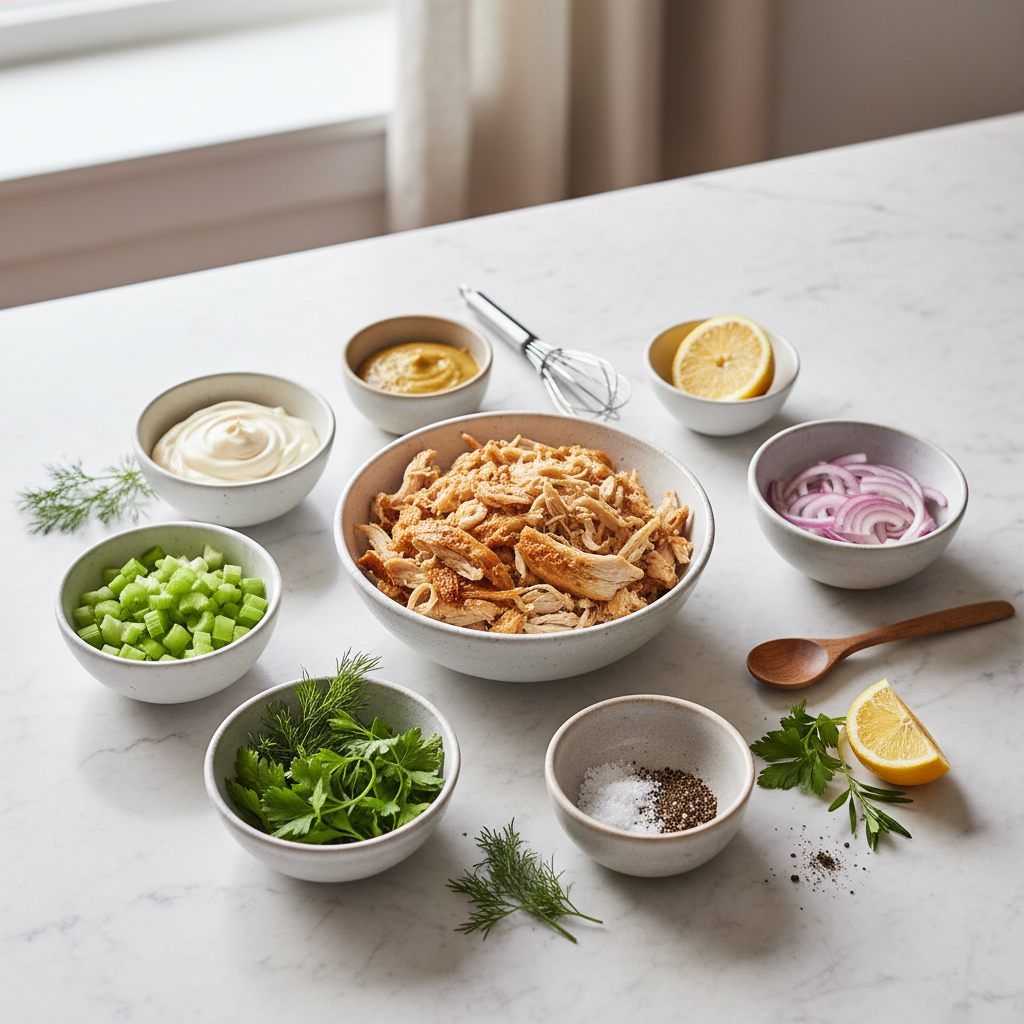
Key elements that usually matter most:
- Chicken texture: bite-size pieces or a rough shred so it feels substantial, not mushy
- Creamy + tangy: mayo plus Dijon and lemon (or vinegar) gives lift
- Crunch: celery is the classic, but it needs a sharp dice so every bite gets snap
- Seasoning: salt early, pepper at the end, and taste again after chilling
If yours turns out “fine but forgettable,” it’s almost always missing acid, salt, or crunch, not more mayo.
Classic Chicken Salad Recipe (Easy, reliable, weeknight-friendly)
This is the base chicken salad recipe I’d keep in your back pocket. From here, you can add grapes, nuts, herbs, or swap the dressing, but the core stays stable.
Ingredients (about 4 servings)
- 3 cups cooked chicken, diced or loosely shredded (rotisserie works well)
- 1/2 cup mayonnaise
- 1 tsp Dijon mustard
- 1 tbsp lemon juice (or 2 tsp apple cider vinegar)
- 1 cup celery, finely diced
- 2–3 tbsp red onion or scallions, finely diced (optional but helpful)
- 1/2 tsp kosher salt, then more to taste
- 1/4 tsp black pepper, then more to taste
- 1–2 tbsp chopped fresh parsley or dill (optional)
Steps
- In a bowl, whisk mayo, Dijon, and lemon juice until smooth.
- Add chicken, celery, onion, salt, and pepper, then fold until coated.
- Rest in the fridge 15–30 minutes, then taste and adjust salt, pepper, and lemon.
Quick win: If you’re using very cold chicken, let the salad sit 10 minutes after mixing, flavors come through more clearly once it loses the “just-fridged” dullness.
Ingredient swap table (so you can use what you have)
Most people don’t fail at chicken salad because of technique, they fail because they’re missing one component and “guess” the replacement. Here are swaps that behave similarly.
| What you’re missing | Best swap | What changes |
|---|---|---|
| Mayo | Greek yogurt (or half yogurt, half mayo) | More tang, lighter feel; may need extra salt |
| Celery | Diced cucumber (seeded) or chopped fennel | Cucumber adds freshness but can weep; fennel adds mild licorice note |
| Dijon | Stone-ground mustard or a tiny splash of pickle brine | Similar tang; brine adds salt too, so taste carefully |
| Lemon juice | Apple cider vinegar or white wine vinegar | More sharp; use a little less, then adjust |
| Fresh herbs | Dried dill (small pinch) or chives | Dried herbs are stronger; add gradually |
Quick self-check: why your chicken salad tastes “off”
If your chicken salad recipe keeps coming out one-note, run this checklist before you add extra ingredients and hope for the best.
- Too bland: add salt first, then a little more lemon or mustard
- Too wet: chicken was very finely shredded, or you added watery veggies; add more chicken or chill and drain lightly
- Too dry/chalky: chicken is overcooked; add 1–2 tbsp mayo or yogurt and a splash of acid
- Tastes heavy: it needs crunch and acid, not more “cream”
- Onion too strong: use scallions, or rinse diced red onion under cold water and pat dry
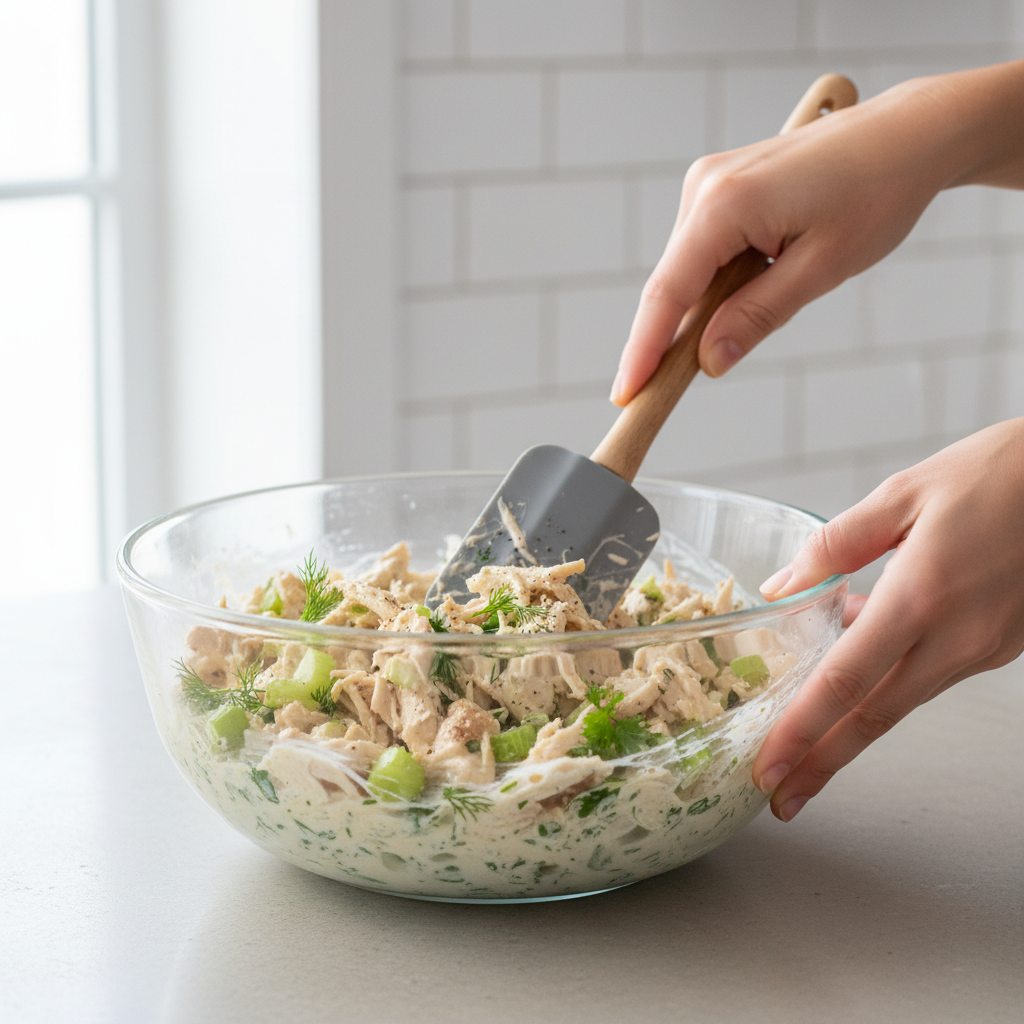
Also, don’t underestimate temperature. Chicken salad often tastes better after a short chill because the dressing tightens up and the seasoning reads more clearly.
How to serve it (and keep it from getting soggy)
The same batch can feel totally different depending on what you put it on. If you want lunches that survive a commute, assemble with a little strategy.
Serving ideas
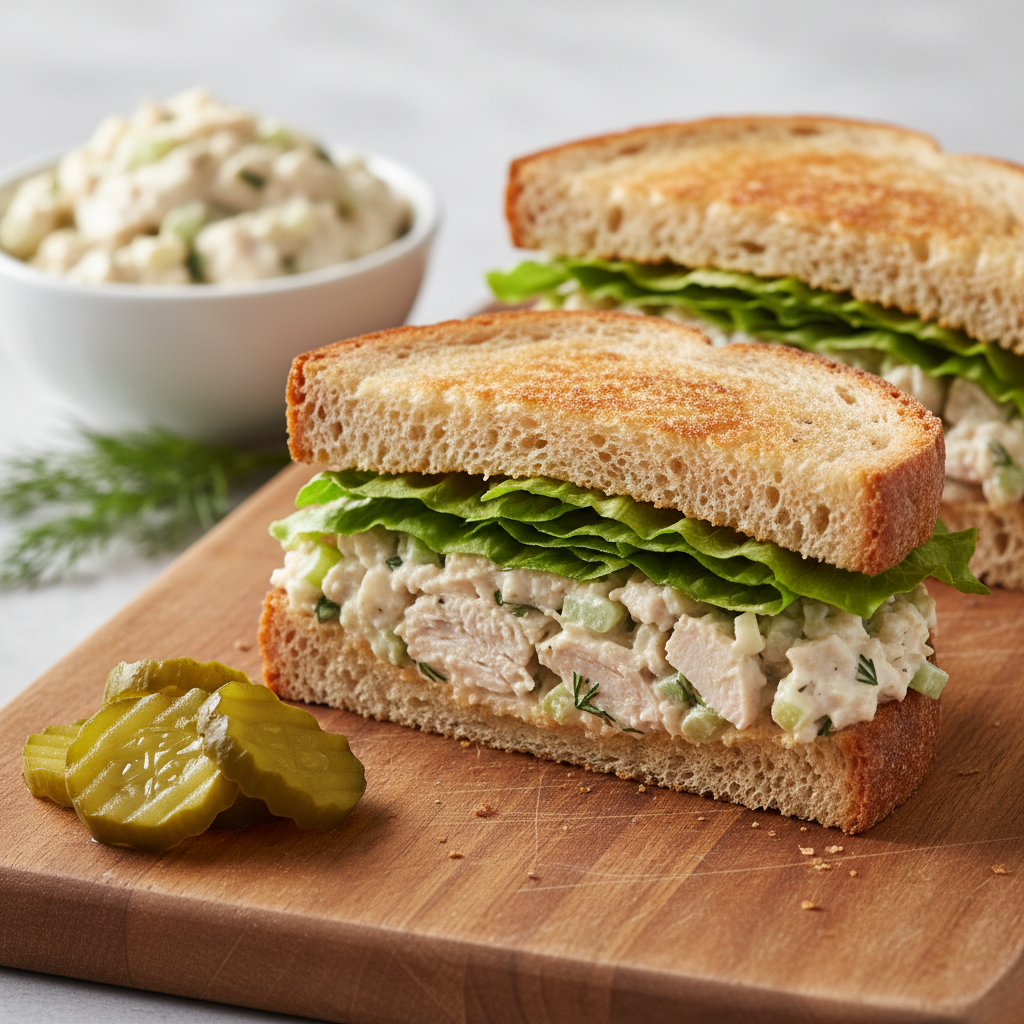
- Sandwich: toasted bread helps, add lettuce as a moisture barrier
- Wrap: use a large tortilla, layer greens first, then chicken salad
- Lettuce cups: butter lettuce or romaine hearts for crunch
- Protein bowl: over greens with tomatoes and cucumber
- Snack plate: with crackers, grapes, and pickles
Meal prep tips that actually help
- Keep chicken salad in one container, bread or wraps separate until eating.
- If adding grapes or apples, fold them in the day you plan to eat for best texture.
- For extra crunch, store chopped nuts separately and sprinkle on top.
Food safety and storage (real-life guidelines)
Chicken salad is simple, but it’s also perishable. According to USDA Food Safety and Inspection Service (FSIS), cold foods should be kept at 40°F or below, and leftovers should be refrigerated promptly.
- Fridge: many home cooks aim to finish within 3–4 days, assuming it stayed cold and was handled cleanly
- Freezer: usually not ideal because mayo-based dressings can split after thawing
- When to toss it: sour smell, visible liquid separation with off odor, or if it sat out too long
If you’re cooking for someone pregnant, older, immunocompromised, or with specific health risks, it’s smart to be extra cautious and consider asking a healthcare professional for personalized guidance.
Easy variations (when you want a twist without ruining the base)
Once you like the classic, changes feel safer. Keep the same balance, then swap one “lane” at a time.
- Grapes + pecans: halved red grapes, toasted pecans, and a touch more lemon
- Curry chicken salad: 1–2 tsp curry powder, add raisins if you like sweet-salty
- Avocado boost: replace part of mayo with mashed avocado, eat within a day since it browns
- Ranch-ish: add chopped dill, a little garlic powder, and extra black pepper
- Spicy: minced jalapeño or a small spoon of chipotle in adobo, go slow
Conclusion: your next “default lunch” can be simple
A solid chicken salad recipe is less about fancy extras and more about hitting the right notes: tender chicken, creamy dressing, real crunch, and a little acid so every bite stays bright. Make the classic version once, taste it after it chills, then only tweak one thing at a time so you learn what you actually like.
If you want a practical next step, cook or buy chicken for the week, mix a half batch first, and write down your final salt and lemon adjustments, that small habit makes the next batch feel effortless.
FAQ
How do I keep chicken salad from getting watery?
Dice watery add-ins small and dry them well, especially cucumber or rinsed onions. If you used very wet chicken, chilling the mix can help it tighten; if needed, fold in a bit more chicken or a spoon of mayo to rebalance.
What’s the best chicken to use for a classic chicken salad recipe?
Rotisserie chicken is convenient and usually stays tender. If you cook your own, thighs tend to be more forgiving than breast, though either can work if you avoid overcooking.
Can I make chicken salad without mayonnaise?
Yes, Greek yogurt is the most common swap, or you can do a yogurt-and-olive-oil style dressing. Expect a tangier flavor, and you may want a little extra salt or mustard for depth.
Why does my chicken salad taste flat even after seasoning?
It often needs acidity more than anything else. Add lemon juice or a small splash of vinegar, then recheck salt; those two work together, and the flavor usually “wakes up.”
How long can chicken salad stay in the fridge?
Many people treat it as a 3–4 day item when kept cold in a sealed container, but conditions vary by handling and fridge temperature. If you’re unsure, it’s safer to discard it.
Is it better shredded or chopped?
Chopped gives clean bites and a deli-style feel, while a rough shred holds dressing well and feels softer. Very fine shredding can turn pasty, so stop while pieces still look distinct.
What can I add for crunch besides celery?
Fennel, diced bell pepper, chopped pickles, or toasted nuts can work. Pick one crunchy add-in at first, too many can make the salad feel busy and harder to season.
Can I serve chicken salad at a picnic?
Yes, but keep it cold and limit time at room temperature. According to USDA FSIS guidance, perishable foods shouldn’t sit out longer than 2 hours, or 1 hour in hot weather, so a cooler and small batches help.
If you’re trying to dial in a chicken salad that fits your routine, like higher-protein, lighter mayo, or a version that holds up for packed lunches, it can be worth building a “house” mix you repeat and tweak slowly, rather than reinventing it every time.