
Iced coffee homemade is usually where people get stuck on two things: it comes out watery, or it tastes harsh and bitter. The fix is less about fancy gear and more about getting the strength and chilling method right.
Once you nail a repeatable base coffee, you can tweak sweetness, milk, and flavorings without guessing. That means fewer disappointing batches, and you stop “fixing” bad coffee with extra syrup.

Below is an easy, flexible recipe, plus a quick troubleshooting guide for common issues like separation, sourness, and “why does it taste fine hot but bad over ice?”
What makes homemade iced coffee taste better (or worse)
Good iced coffee is mostly about extraction and dilution. When hot coffee hits ice, it dilutes fast, and dilution magnifies flaws.
- Too weak: brewed at normal hot-coffee strength, then melted ice finishes the job and thins flavor.
- Too bitter: over-extracted grounds (often grind too fine, brew too long, or water too hot), then chilled bitterness feels sharper.
- Too sour: under-extracted coffee (grind too coarse, brew too short) or very light roasts that need more time or slightly hotter water.
- Stale/fridge taste: brewed coffee left uncovered, stored too long, or absorbed odors.
According to the Specialty Coffee Association (SCA), brew strength and extraction are foundational to consistent flavor. You don’t need to chase lab-perfect numbers at home, but the principle helps: control strength first, then customize.
The easy iced coffee homemade recipe (strong-brew method)
This is the quickest path to “tastes like the coffee shop” without special equipment. You brew a slightly stronger batch, cool it briefly, then pour over ice.
Ingredients (1 large glass)
- 6 oz (180 ml) strong hot coffee
- 6–8 large ice cubes (large cubes melt slower)
- 1–3 tsp simple syrup or sugar (optional)
- Milk or half-and-half, to taste (optional)
How to make it
- Brew strong: use about 1.5x your normal coffee dose (example: if you do 1 tbsp per 6 oz water, do 1.5 tbsp).
- Cool 3–5 minutes: let the coffee stop steaming aggressively so it doesn’t instantly nuke your ice.
- Sweeten while warm: if using sugar, stir it in before pouring over ice so it dissolves cleanly.
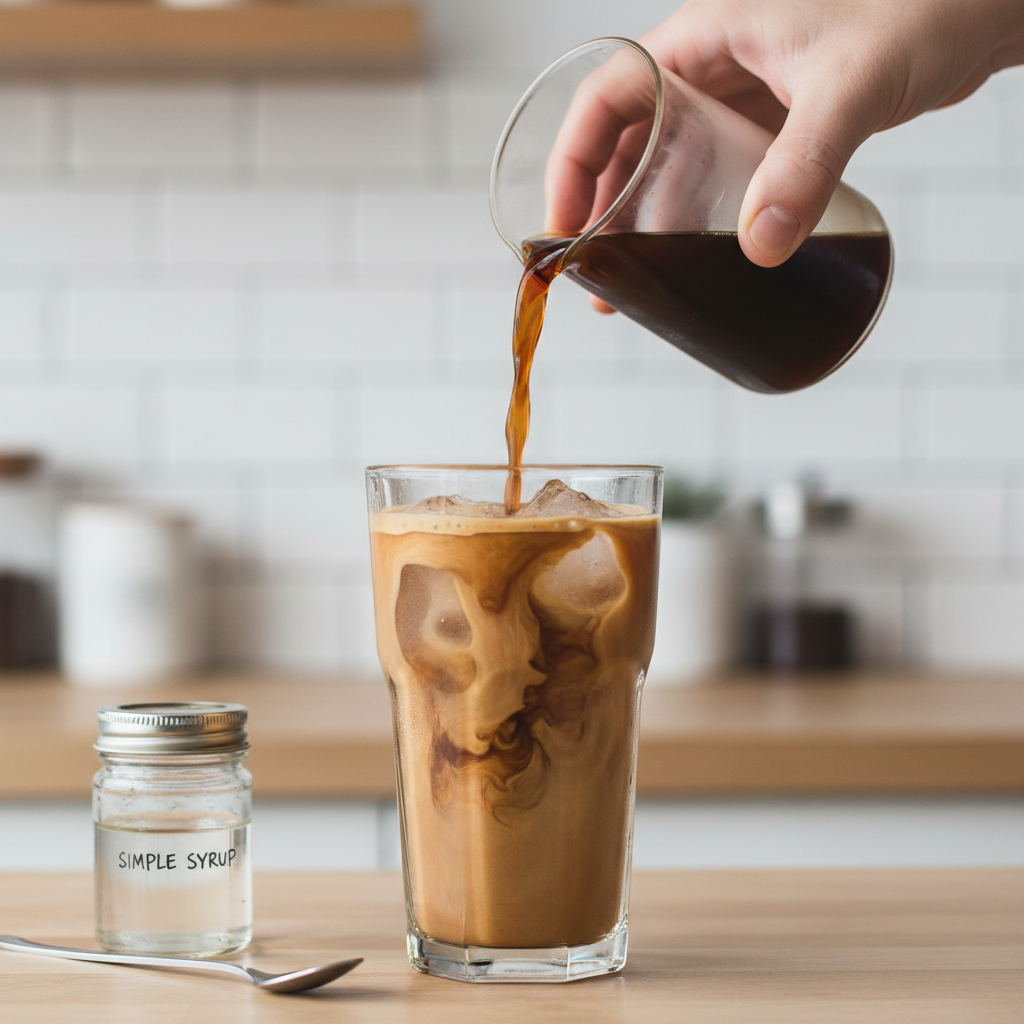
- Build the glass: fill with ice, pour coffee, add milk if you want, stir 10 seconds.
Key point: if it tastes right before ice, it will usually taste right after ice. If it tastes “almost right” hot but dull iced, your brew likely needs a bit more strength.
Cold brew vs iced coffee: which one should you make?
People often mix these up. “Iced coffee” is typically hot-brewed coffee chilled and served over ice, while cold brew is steeped in cold water for many hours and usually tastes smoother.

Quick comparison table
| Method | Time | Flavor | Best for |
|---|---|---|---|
| Strong-brew iced coffee | 5–10 min | Brighter, more “classic coffee” | Fast morning routine |
| Cold brew concentrate | 12–18 hrs | Smoother, lower perceived bitterness | Batch prep for the week |
| Japanese-style flash brew | 5–8 min | Clean, aromatic, less muddy | Pour-over fans who want clarity |
How to choose ratios (so it doesn’t taste watery)
Ratios are the unglamorous secret. You can keep it simple with a few “house rules” and adjust from there.
- For strong-brew iced coffee: brew 1.25x–1.75x your normal strength, then use a full glass of ice.
- For cold brew concentrate: many home recipes land around 1:4 to 1:6 coffee-to-water by weight for concentrate, then dilute to taste.
- For flash brew: replace about 35%–45% of your brew water with ice in the server, then brew directly onto ice.
If you’re new to this, pick one method and stick with it for three tries before changing everything. Most “I tried it and it failed” stories come from changing beans, grind, and ratio all at once.
Make-ahead options (batching without ruining flavor)
If you want iced coffee homemade on autopilot, batch prep is realistic, but storage matters.
Option A: Brewed coffee “iced coffee base” (2–3 days)
- Brew at 1.5x strength.
- Cool to room temp, then refrigerate in a sealed container.
- Serve over ice, add milk or water if it’s too strong.
Option B: Cold brew concentrate (up to about a week for many people)
- Steep coarse grounds in cold water 12–18 hours.
- Strain well, refrigerate sealed.
- Dilute per glass with water or milk.
Food safety and freshness vary by household and fridge habits. If anything smells “off,” toss it. If you’re pregnant, immunocompromised, or have specific health concerns, it’s reasonable to ask a clinician what storage practices make sense for you.
Fix it fast: a self-check and troubleshooting list
When your glass doesn’t taste right, diagnose before you add more syrup.
- Watery after 5 minutes: brew stronger, use larger ice, or switch to flash brew.
- Bitter and flat: grind slightly coarser, shorten brew time, or try a medium roast.
- Sour and sharp: grind a touch finer, extend brew time, or use hotter water (without boiling aggressively).
- Tastes “old”: store coffee sealed, keep it away from onions/garlic, and avoid leaving it uncovered.
- Milk separates or looks curdled: very acidic coffee + some dairy can clash; try a different milk, add milk first, or use a smoother brew like cold brew.
Flavor upgrades that still taste like coffee
Once the base is solid, upgrades are easy. The mistake is using flavors to cover extraction problems.
- Simple syrup: sweeter with less stirring, and it won’t sink to the bottom like granulated sugar.
- Vanilla: 1–2 drops vanilla extract, or a small splash of vanilla syrup.
- Cinnamon: pinch in the grounds before brewing, or dust on top.
- Salt trick (carefully): a tiny pinch can soften bitterness for some palates, but too much tastes weird fast.
- Milk choices: half-and-half for body, oat milk for sweetness, whole milk for balance.
Quick rule: if you can’t taste coffee underneath your add-ins, your coffee base probably needs adjustment more than your flavorings do.
Conclusion: a simple plan for better iced coffee at home
If your iced coffee keeps disappointing you, don’t overcomplicate it. Brew slightly stronger than usual, sweeten while warm, then chill over plenty of ice and adjust once you taste it.
For your next batch, pick one method: strong-brew for speed, or cold brew for a smoother profile. Write down the ratio you used, then change just one variable next time, that’s the quickest way to land on an iced coffee homemade routine you actually repeat.
Action step: try the strong-brew method tomorrow morning, and if it still tastes watery, increase coffee dose by a small step rather than cutting ice.
FAQ
How do I make iced coffee homemade without it tasting watered down?
Brew a stronger base (around 1.25x–1.75x your usual strength) and use larger ice cubes. If you want it extra consistent, try flash brewing so the melt is “planned” into the recipe.
Is cold brew the same thing as iced coffee?
Not quite. Cold brew steeps in cold water for hours and often tastes smoother, while iced coffee is typically hot-brewed coffee cooled and served over ice, with a brighter profile.
What coffee roast works best for iced coffee?
Medium roasts are a safe starting point because they tend to keep sweetness without tasting too sharp. Dark roasts can turn bitter faster if over-extracted, while light roasts can taste sour if the brew is underdeveloped.
Can I make iced coffee with instant coffee?
Yes, and it can be surprisingly decent for speed. Use less water than you think you need, dissolve it fully in a small amount of hot water first, then add cold water and ice.
Why does my iced coffee taste bitter even when I add milk?
Milk can soften bitterness, but it won’t erase over-extraction. Try a slightly coarser grind, reduce brew time, or use cold brew if you consistently prefer a smoother taste.
How long can I store homemade iced coffee in the fridge?
Many people keep brewed coffee for a couple of days and cold brew longer, but flavor drops over time and storage conditions vary. Keep it sealed, and if it smells off, it’s smarter to discard.
What’s the easiest sweetener for iced coffee?
Simple syrup is the most forgiving because it mixes instantly even in a cold glass. If you use sugar, dissolve it while the coffee is still warm.
Can iced coffee be “healthier” than hot coffee?
It depends on what you add. Black iced coffee is similar to black hot coffee, but flavored syrups and heavy cream can add a lot quickly. If you have dietary or medical constraints, it’s reasonable to check with a licensed professional.
If you’re trying to get iced coffee homemade to taste consistent every time, keep it simple: lock in one ratio, one brew method, and one sweetener, then only change one thing per batch. It’s less exciting, but it’s how you actually find your “house recipe” without wasting coffee.