
Lasagna recipe easy is usually code for two things: fewer steps and fewer surprises, especially when you’re using no-boil noodles and you still want clean slices, not a soupy casserole.
No-boil lasagna can be genuinely simple, but it also has one “gotcha” that trips people up: those noodles need enough moisture to soften while baking, and the rest of the pan can’t turn watery in the process. That balance is the whole game.
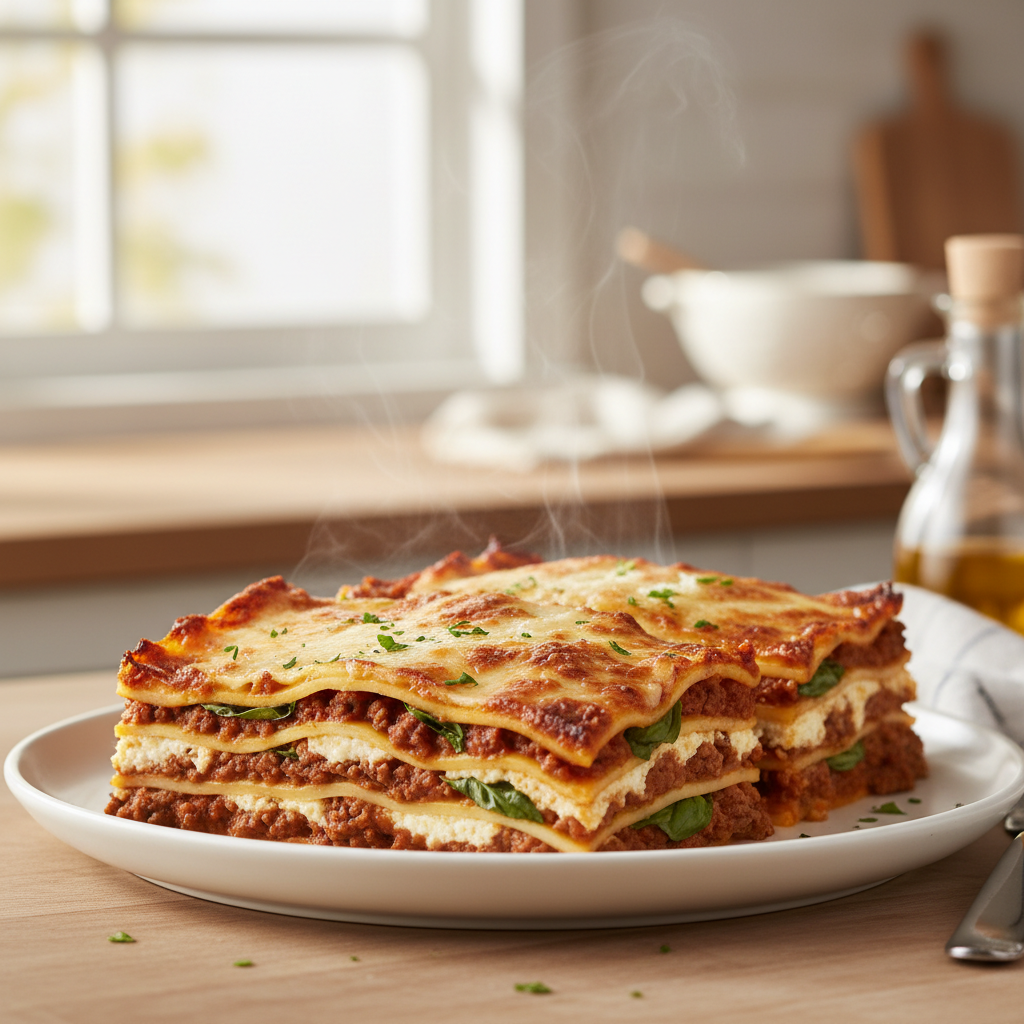
In this guide you’ll get a dependable method, a couple of smart swaps based on what’s in your fridge, and a short checklist to troubleshoot texture. If you want the “works on a Tuesday” version, you’re in the right place.
Why no-boil noodles sometimes work great (and sometimes don’t)
No-boil noodles are par-cooked and dried, so they finish softening in the oven. When they turn out tough or crunchy, it’s rarely because the brand is “bad,” it’s typically because the pan didn’t have enough evenly distributed liquid.
- Moisture distribution: Sauce needs to touch noodle edges and corners, not just the center.
- Sauce thickness: Very thick sauce can leave noodles under-hydrated, very thin sauce can make the whole bake sloppy.
- Rest time: Lasagna firms up as it cools, skip resting and it looks watery even if it tastes fine.
- Covering: Baking covered traps steam and helps noodles soften, then uncovered time browns the cheese.
According to USDA Food Safety and Inspection Service, leftovers should be refrigerated within 2 hours, which matters here because a big pan can sit hot on the counter longer than you realize. Plan your timing so cooling and storing stays safe.
The easy no-boil lasagna recipe (step-by-step)
This is a classic meat-and-cheese version, built to be forgiving. If you prefer vegetarian, you can swap the meat for sautéed mushrooms and spinach, just keep an eye on extra water from vegetables.
Ingredients (9x13 pan, about 8–10 servings)
- 1 lb ground beef or Italian sausage (or a mix)
- 1 jar (24 oz) marinara or pasta sauce
- 1 can (14–15 oz) crushed tomatoes or tomato sauce
- 2 cups water or low-sodium broth (to hydrate no-boil noodles)
- 1 box no-boil lasagna noodles (usually 9–12 sheets, brand varies)
- 15 oz ricotta (or cottage cheese if that’s your thing)
- 1 egg (helps ricotta set, optional but helpful)
- 2–3 cups shredded mozzarella
- 1/2 cup grated Parmesan
- 2 tsp Italian seasoning (or basil/oregano blend)
- Salt and black pepper
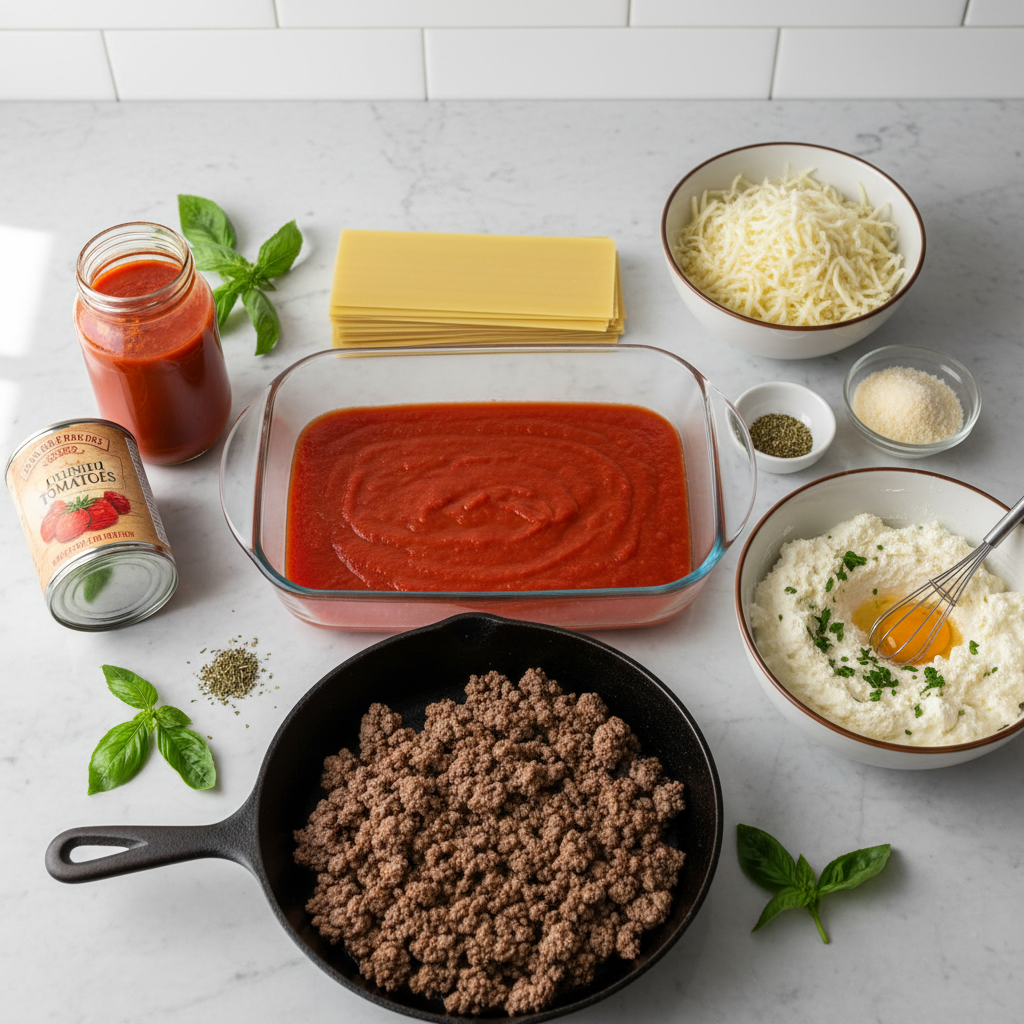
1) Make a “hydrating” sauce
In a bowl or large measuring cup, stir together marinara, crushed tomatoes, and water or broth. Season with Italian seasoning and a little pepper. If your marinara is very salty, hold back on extra salt until the end.
Key point: this sauce should look a bit looser than what you’d spoon on pasta. It thickens in the oven.
2) Cook the meat (optional but recommended)
Brown the meat in a skillet, drain excess fat if needed, then stir in 1 cup of the sauce to keep it saucy, not dry. If you skip meat, you can move straight to assembling.
3) Mix the ricotta layer
Combine ricotta, egg, a pinch of salt, and a handful of Parmesan. Keep it simple, over-seasoning can make the whole pan taste “herby” in a weird way.
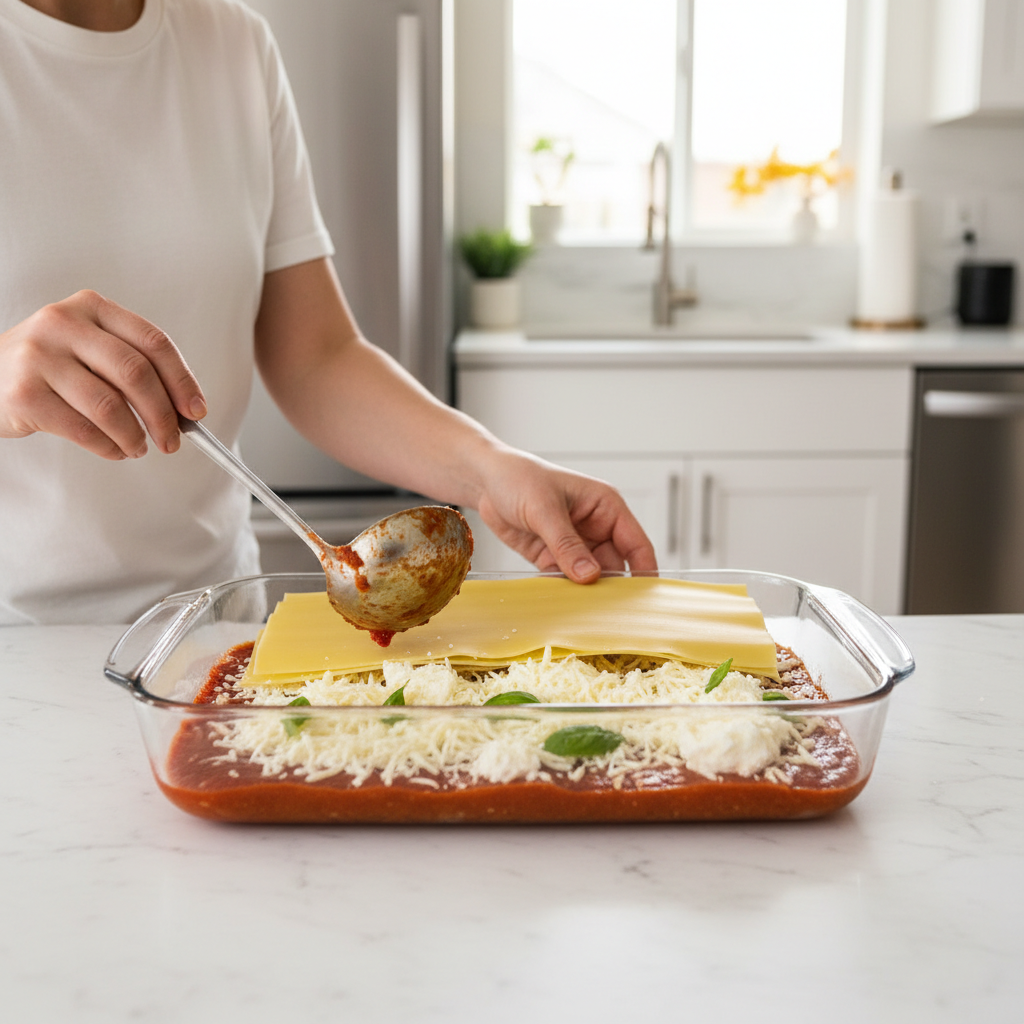
4) Assemble with confidence (the order that prevents dry corners)
- Spread 3/4 cup sauce on the bottom of the pan.
- Add a layer of no-boil noodles, break sheets to fit if needed.
- Add 1/3 of the ricotta mixture in small dollops.
- Add 1/3 of the meat mixture (or veggies).
- Sprinkle mozzarella lightly.
- Repeat for 3 total noodle layers, finishing with sauce and a generous mozzarella + Parmesan top.
Corner insurance: before baking, spoon a little extra sauce along the pan edges where noodles often stay exposed.
5) Bake
- Preheat oven to 375°F.
- Cover tightly with foil (try not to press the cheese).
- Bake 40 minutes covered, then 15–20 minutes uncovered until bubbly and browned.
- Rest 15–25 minutes before slicing.
That rest is not optional if you want neat squares. The lasagna needs time to settle, and the noodles keep absorbing liquid as it cools.
Quick self-check: are you set up for tender noodles and clean slices?
Before you commit the pan to the oven, run through this. It’s the fastest way to avoid “why is it crunchy” disappointment.
- Sauce looks slightly thin, not watery, not paste-thick.
- Noodle edges are covered, especially corners and sides.
- Foil will seal well, loose foil often means steam escapes.
- Cheese isn’t piled too early, a huge cheese layer can block moisture from reaching noodles underneath.
- Planned rest time exists in your schedule, even 15 minutes helps.
Common problems and fixes (use this like a rescue map)
Most issues are fixable without starting over. Here’s what usually works in real kitchens.
Tough or crunchy noodles
- Likely cause: not enough liquid, or noodles exposed at edges.
- Fix now: pour 1/4–1/2 cup warm water around the edges, re-cover tightly, bake 10–15 minutes more.
Watery lasagna
- Likely cause: thin sauce plus high-water add-ins (zucchini, mushrooms, spinach) or skipped rest.
- Fix next time: cook moisture out of veggies, use less added water, and don’t skip resting.
Dry, crumbly slices
- Likely cause: meat too lean and under-sauced, or not enough sauce overall.
- Fix: mix some sauce into the meat, and keep a little extra sauce for the top layer.
Cheese burns before the center feels hot
- Likely cause: oven runs hot, pan placed too high, or uncovered too long.
- Fix: tent with foil and move to middle rack, then uncover only at the end for browning.
A practical table: ingredient swaps that still taste like lasagna
This is where a lasagna recipe easy earns its name, you can flex based on what you have without wrecking texture.
| What you’re missing | Swap | What to watch |
|---|---|---|
| Ricotta | Cottage cheese (small curd) | Drain a little if it looks very wet |
| Ground beef | Italian sausage, ground turkey | Turkey can dry out, add extra sauce |
| Jarred marinara | Crushed tomatoes + garlic + herbs | Simmer briefly to mellow acidity |
| Mozzarella | Provolone blend or Italian blend | Some blends brown faster, uncover later |
| Parmesan | Pecorino Romano | Saltier, use a lighter hand |
Make-ahead, freezing, and reheating (without ruining texture)
Lasagna is one of the few dinners that often tastes better the next day, but no-boil noodles add one more timing detail.
- Make-ahead (unbaked): assemble, cover tightly, refrigerate up to 24 hours. Add 10–15 minutes to covered bake time since the pan starts cold.
- Freeze (unbaked): wrap in plastic + foil, freeze. Thaw in fridge 24–48 hours before baking for more even cooking.
- Freeze (baked): cool fully first, portion if possible. Reheat covered so it steams gently.
According to FDA, a refrigerator should be set to 40°F or below for food safety. If your fridge runs warm, leftovers spoil faster, and creamy dishes are not forgiving.
Key takeaways (read this if you’re in a hurry)
- No-boil noodles need moisture, so loosen your sauce slightly and cover the pan well.
- Protect the corners, that’s where dryness shows up first.
- Rest before slicing, it’s the difference between clean layers and a puddle.
- Swaps are fine, just manage extra water from veggies and lean meats.
Conclusion: the “easy” part is the method, not magic
If you want a lasagna recipe easy enough for weeknights, no-boil noodles can absolutely deliver, as long as you treat sauce like part of the cooking process, not just flavor. Make it a little looser, seal the pan, give it a real rest, and you’ll usually get tender layers without babysitting a pot of noodles.
Next step: pick one swap from the table that fits what you have tonight, then commit to the rest time, even if dinner runs a bit later, you’ll thank yourself when you cut that first slice.
FAQ
- Do no-boil noodles really cook through in the oven?
Usually yes, if sauce moisture reaches them and the pan stays covered long enough to trap steam. Dry edges are the common reason they don’t soften. - How much extra water should I add for no-boil lasagna?
It depends on how thick your marinara is, but many home cooks do well by loosening sauce until it’s spoonable and not paste-thick. If your sauce already looks thin, add less liquid. - Can I use cottage cheese instead of ricotta?
Yes, and it’s a practical swap. If it looks watery, drain briefly so the finished lasagna doesn’t turn loose. - Why is my lasagna watery even after baking?
Often it’s a combination of thin sauce, watery vegetables, and cutting too soon. Letting it rest helps the noodles absorb liquid and the cheese layer set. - How do I keep the top from burning?
Keep the lasagna covered for most of the bake, then uncover near the end to brown. If your oven browns aggressively, move the rack to the middle and tent with foil. - Can I assemble it the night before?
Yes, and it can be a great move for busy days. Bake a bit longer covered since the dish starts cold, and check that the center bubbles before uncovering to brown. - What internal temp should lasagna reach?
Many people aim for a hot, bubbling center and fully melted cheese; if you’re cooking meat-based casseroles and want a temperature cue, consider 165°F as a common safety target, and consult a food safety professional if unsure.
If you’re trying to simplify dinner planning, this no-boil approach works well as a repeatable template, keep the sauce-to-noodle moisture right, then rotate fillings like sausage and spinach, mushrooms, or a lighter turkey version depending on the week.