
Mexican rice easy is mostly about two things people skip: toasting the rice for a nutty base, and getting the liquid-to-rice ratio right so it stays fluffy, not sticky. If your rice keeps turning out pale, clumpy, or strangely wet, it’s rarely “bad rice”, it’s usually one small step in the middle.
Restaurant-style Mexican rice has that warm tomato color, light bite, and a savory smell you notice before it hits the plate. It’s a side dish, but it acts like glue for the whole meal, tacos, enchiladas, bowls, even leftover chicken.
Below is a practical, no-drama method, plus a ratio table, swap options, and quick fixes for the mistakes most home cooks make when the pot doesn’t cooperate.
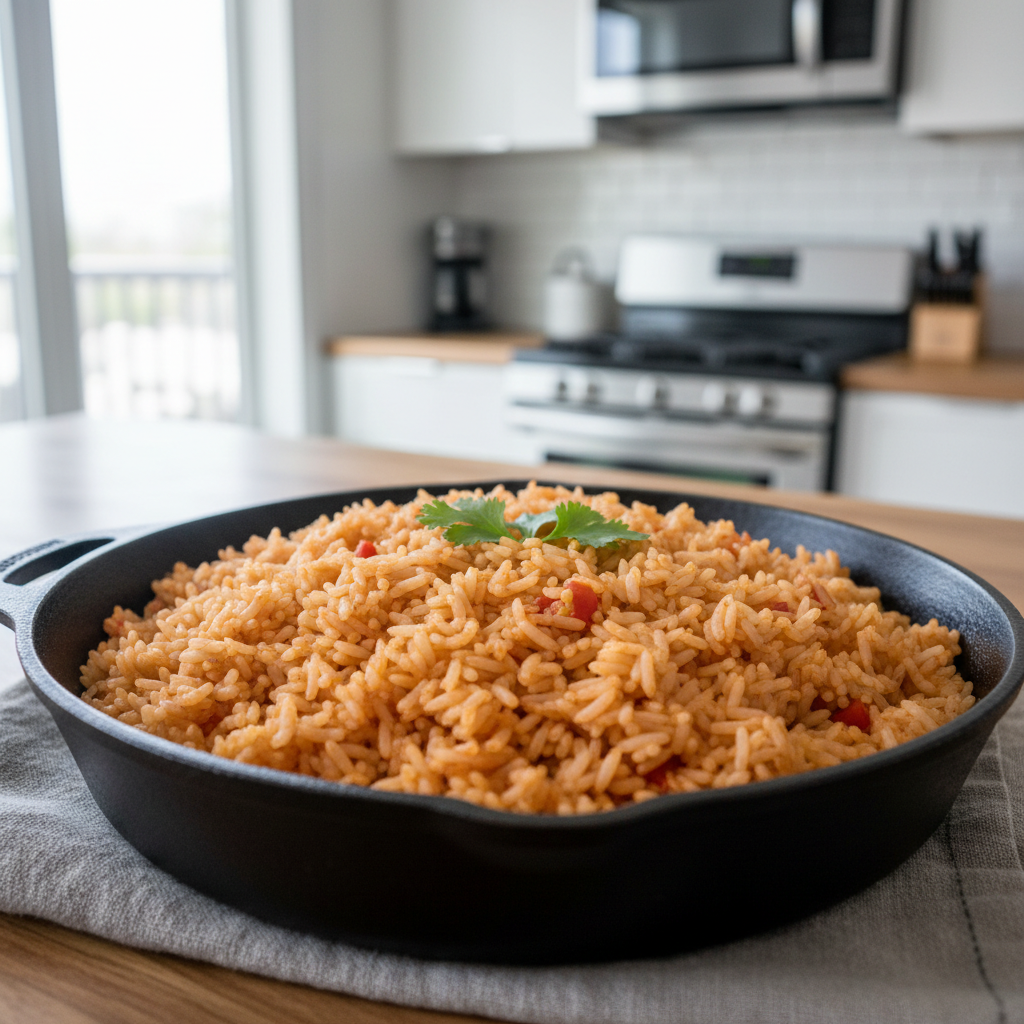
What makes restaurant-style Mexican rice taste different
Most “close but not quite” batches miss one of these. The good news, they’re fixable.
- Toasting the rice in fat: This coats grains so they stay separate and adds a nutty depth.
- A tomato base that’s cooked, not just poured: Tomato paste or sauce needs a minute in the pan to lose raw acidity.
- Consistent simmer + tight lid: Frequent peeking dumps steam, then the texture gets weird.
- Seasoning in the liquid: Salt and bouillon dissolve evenly, instead of sitting on top at the end.
According to USDA Food Safety and Inspection Service (FSIS), cooked rice should be cooled and refrigerated promptly if you’re saving leftovers, because rice can support bacterial growth when it sits warm too long. That matters when you cook big batches for meal prep.
Quick self-check: why your rice turns out mushy, hard, or bland
If your last attempt went sideways, use this fast checklist before you change the whole recipe.
- Mushy: too much liquid, heat too high, lid lifted a lot, or rice not toasted long enough.
- Hard in the center: not enough liquid, simmer too low, lid not sealing, or cook time cut short.
- Burned bottom: heat too high after simmering starts, thin pot, or not enough oil.
- Bland: liquid wasn’t seasoned, tomato flavor too weak, or no sautéed aromatics.
- Gummy/sticky: stirred during simmer, or used a rice type that needs different ratios.
The core method: mexican rice easy, one pot, consistent results
This is the dependable version you can repeat on a weeknight. It’s written for long-grain white rice because that’s the most common “restaurant style” base.
Ingredients (about 4 servings)
- 1 cup long-grain white rice (rinsed or unrinsed, see note below)
- 2 tbsp neutral oil (or a mix of oil + a little butter)
- 1/4 cup finely diced onion
- 2 cloves garlic, minced
- 2 tbsp tomato paste or 1/3 cup tomato sauce
- 1 3/4 to 2 cups warm chicken broth (or veggie broth)
- 1/2 tsp kosher salt (adjust if broth is salty)
- Optional: 1/4 tsp cumin, pinch of oregano, small diced carrot/peas
Steps
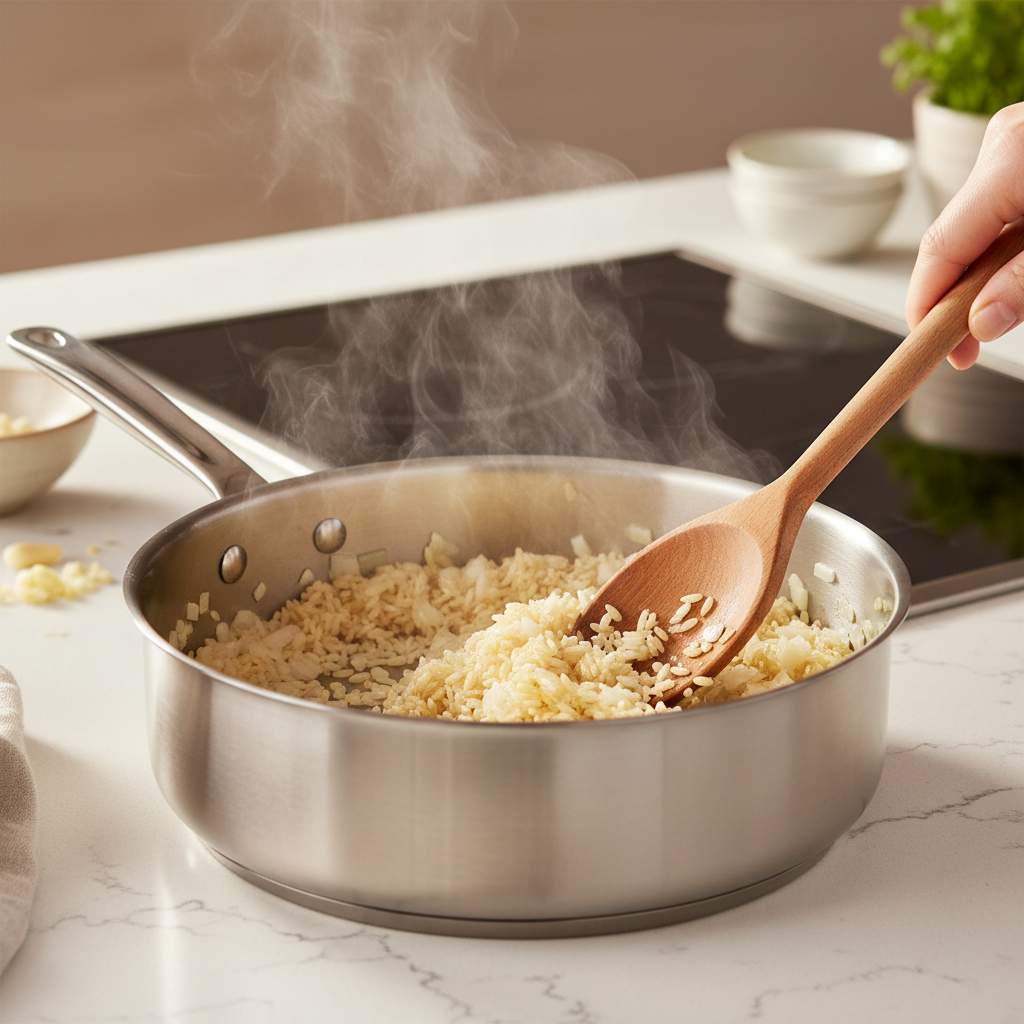
- Heat oil in a pot over medium heat, add rice, stir often until it smells nutty and turns light golden in spots, usually 4–7 minutes.
- Add onion, cook 1–2 minutes, then add garlic for about 30 seconds.
- Stir in tomato paste (or sauce) and cook until it darkens slightly and looks glossy, about 45–60 seconds.
- Pour in warm broth, add salt and any spices, stir once to level the rice.
- Bring to a gentle simmer, cover tight, reduce heat to low.
- Cook 15–18 minutes, then turn off heat and rest covered 10 minutes.
- Fluff with a fork, taste, adjust salt, serve.
Rinsing note: Many people rinse rice to remove surface starch, which can help reduce stickiness. If you rinse, drain well and keep your liquid closer to the higher end at first, since wet grains can behave slightly differently in some pots.
Liquid ratio table (and how to choose the right one)
The “right” ratio depends on rice type, pot shape, and even how strong your simmer runs. Start here, then adjust by 2–3 tablespoons next time if needed.
| Rice type | Liquid per 1 cup rice | Covered cook time | Best use |
|---|---|---|---|
| Long-grain white | 1 3/4 to 2 cups | 15–18 min + rest | Classic restaurant-style |
| Jasmine | 1 1/2 to 1 3/4 cups | 12–15 min + rest | More aromatic, slightly softer |
| Basmati | 1 1/2 to 1 3/4 cups | 12–15 min + rest | Fluffy, separated grains |
| Brown rice | 2 1/4 to 2 1/2 cups | 35–45 min + rest | Nutty, higher fiber, longer cook |
Practical tip: If your pot is wide and shallow, you’ll often need a touch more liquid than a tall, narrow saucepan because evaporation runs higher.
Flavor variations that still taste “restaurant”
Once the base works, you can customize without losing that familiar profile.
- Broth + bouillon combo: Use low-sodium broth and add a small pinch of bouillon for a deeper savory note, go easy on salt.
- Salsa swap: Replace tomato sauce with a mild salsa, then reduce added salt until you taste.
- Veggie boost: Add small diced carrots with onions, stir frozen peas in right after cooking, residual heat warms them.
- Spice level: A pinch of chili powder is usually enough, too much can overpower the tomato base.
- Cilantro-lime finish: Add at the very end so it stays bright, not cooked down.
Troubleshooting: quick fixes when it’s already cooking
Sometimes you notice an issue mid-simmer. Here are realistic saves that usually work.
If it looks too wet at the end
- Keep it covered, rest 10 more minutes, then fluff. A lot of “wet” rice just needs time.
- If it’s still soupy, uncover and cook on very low heat for 2–3 minutes, watching closely.
If it’s undercooked but the pot is dry
- Add 2–4 tbsp hot broth, cover, cook 3–5 minutes, then rest.
- Check your lid seal next time; steam leaks are a common hidden cause.
If the bottom is browning too fast
- Turn heat down immediately and move the pot off the burner for a minute.
- A heat diffuser can help on electric stoves that spike.
Common mistakes (and what to do instead)
These are the patterns I see when people say “I followed a recipe and it still didn’t work.”
- Stirring during simmer: Stir once after adding liquid, then stop. Stirring releases starch and makes it gummy.
- Cooking on “medium” the whole time: After it simmers, low heat is your friend.
- Cold broth straight from the fridge: It can slow the pot and mess with timing, warm liquid behaves more predictably.
- Overdoing tomato sauce: More isn’t always better, too much liquid can throw off texture and taste sharp.
Key takeaway: The easiest path to repeatable mexican rice easy results is controlling heat and steam, not adding more spices.
Conclusion: keep the method, adjust the details
If you want restaurant-style flavor without babysitting the stove, toast the rice until it smells nutty, cook the tomato base briefly, then commit to a low simmer and a real rest time. That’s the part that separates “fine” from “why is this so good?”
For your next batch, pick one tweak only, either adjust liquid by a couple tablespoons or change the pot heat after simmering, and you’ll dial it in fast.