
Beef stir fry quick meals live or die by two things: prep and heat. If your beef turns chewy or your vegetables go soggy, it usually isn’t the recipe, it’s the order you cook and how crowded your pan gets. The good news, once you fix those two, this becomes a reliable weeknight dinner you can repeat with whatever vegetables you have.
What makes this worth dialing in is flexibility. You can use fresh or frozen vegetables, cheaper beef cuts if you slice correctly, and a sauce that tastes like takeout without needing a pantry full of specialty bottles. If you cook for a family, this is also one of the easiest ways to “use up the drawer” without anyone complaining.
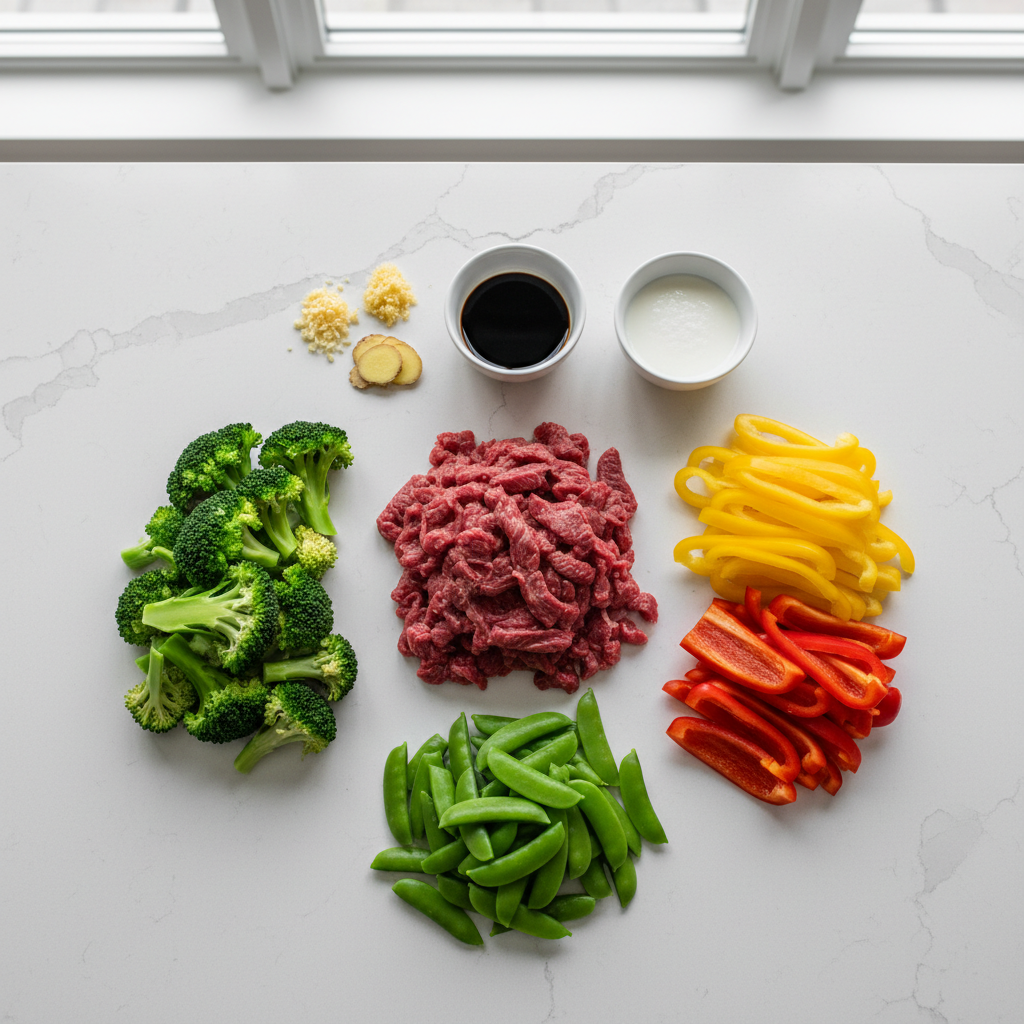
I’ll walk you through why stir-fry goes wrong, a fast prep plan, a veggie guide, and a simple sauce you can adjust. You’ll also get a timing table, because “cook until done” is where weeknight confidence goes to die.
What usually slows down a quick beef stir fry (and how to avoid it)
Most “15-minute” stir-fries quietly assume your ingredients are already cut and your pan is ripping hot. In real kitchens, the delay comes from a few predictable spots.
- Beef sliced too thick or with the grain: it cooks unevenly and feels tough even if it’s technically cooked.
- Cold beef hitting the pan: it steams before it sears, so you lose browning and flavor.
- Too many vegetables at once: overcrowding drops the pan temperature and creates watery stir fry.
- Sauce added too early: liquids cool the pan fast, and vegetables soften before they char.
One mindset shift helps: stir-fry is basically a sequence of short, high-heat cooks, not “everything in, stir, hope.” Once you treat it like that, a beef stir fry quick dinner becomes repeatable.
Ingredient choices that make it fast (and still taste like a real meal)
You can stir-fry with almost any beef cut, but a few options behave better for weeknights.
Best beef for quick cooking
- Flank steak: classic stir-fry texture, great when sliced thin.
- Sirloin: lean, easy to find, usually forgiving.
- Ribeye: more expensive, but very tender and flavorful.
- Skirt steak: big flavor, can be chewy if sliced wrong.
If you’re using a tougher cut, thin slicing and a small amount of cornstarch in the marinade can help. According to USDA Food Safety and Inspection Service, raw meat should be kept refrigerated until cooking, and leftovers should be chilled promptly to reduce food-safety risk.
Vegetables that stay crisp in a fast stir-fry
For a beef-and-vegetable stir-fry, mix “quick” and “slow” vegetables so everything finishes around the same time.
- Quick-cooking: snow peas, snap peas, baby spinach, bean sprouts, scallions.
- Medium: bell peppers, mushrooms, zucchini, onions.
- Slower (best cut small): broccoli, carrots, green beans, cauliflower.
Frozen stir-fry blends can work, but they release water. The trick is to cook them in smaller batches or accept a slightly saucier result.
Self-check: are you set up for a true weeknight stir-fry?
Before you turn on the burner, run this quick checklist. It sounds picky, but it’s the difference between seared beef and steamed beef.
- Is the beef sliced 1/8 inch thick or thinner, and across the grain?
- Are vegetables grouped by cook time (slow vs quick) instead of one big pile?
- Is your sauce mixed in a bowl already (so you’re not measuring mid-cook)?
- Is your pan large enough, or will you need to cook in two batches?
- Do you have a hot, ready serving base (rice/noodles) so stir-fry doesn’t sit?
If you answered “no” to two or more, you can still cook, just expect to slow down. When I’m aiming for a beef stir fry quick result, I treat prep like part of cooking, not optional homework.
Quick beef stir fry recipe with vegetables (20-minute workflow)
This is the version I’d use for a busy weeknight: one simple marinade, a flexible vegetable mix, and a sauce that coats without getting gloppy. It serves 3 to 4, depending on appetites.
Ingredients
- 1 to 1.25 lb beef (flank or sirloin), sliced thin across the grain
- 4 to 6 cups mixed vegetables (example: broccoli + bell pepper + snap peas + onion)
- 2 tbsp neutral oil (avocado, canola, grapeseed)
- 3 cloves garlic, minced
- 1 tsp fresh ginger, grated (optional but helpful)
Fast marinade (5 minutes)
- 1 tbsp soy sauce
- 1 tbsp cornstarch
- 1 tsp toasted sesame oil (optional)
- Black pepper
Simple stir-fry sauce
- 1/3 cup low-sodium soy sauce
- 2 tbsp water or broth
- 1 to 2 tbsp brown sugar or honey (to taste)
- 1 tbsp rice vinegar or lime juice
- 1 to 2 tsp cornstarch (depending on how glossy you want it)
- Optional: 1 to 2 tsp chili garlic sauce
Steps (keep the pan hot)
- Marinate beef: Toss sliced beef with the marinade, set aside while you prep vegetables.
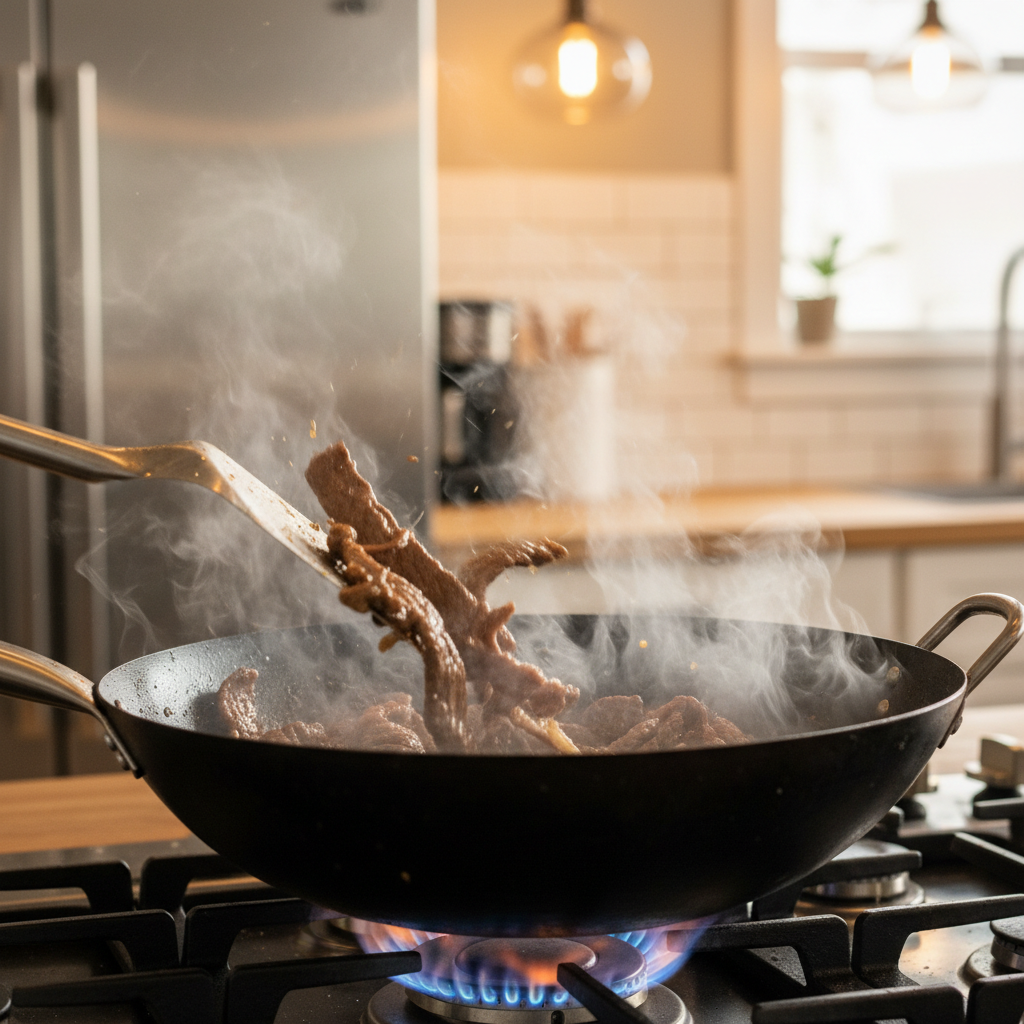
- Preheat: Heat a wok or large skillet until a drop of water sizzles and disappears quickly.
- Sear beef: Add 1 tbsp oil, spread beef in a single layer. Let it sit 45 to 60 seconds before stirring. Cook 2 to 3 minutes total, then remove to a plate.
- Cook vegetables in order: Add remaining oil, then onions/broccoli/carrots first, then peppers/mushrooms, then snap peas/spinach last.
- Aromatics: Add garlic and ginger in the final 30 seconds so they don’t burn.
- Finish: Return beef, pour in sauce, toss 30 to 90 seconds until it coats and thickens.
If your pan is small, do the beef in two batches. It feels like an extra step, but it saves the whole dish.
Timing table: which vegetables go in when
Use this as a guide, then adjust based on how thick you cut everything. Smaller pieces cook faster, and that’s not a bad thing for a weeknight plan.
| Vegetable | Cut | Approx. cook time | When to add |
|---|---|---|---|
| Broccoli | Small florets | 4–6 min | Early |
| Carrots | Matchsticks | 4–6 min | Early |
| Onion | Slices | 3–5 min | Early |
| Bell pepper | Strips | 2–4 min | Middle |
| Mushrooms | Sliced | 3–5 min | Middle |
| Snap peas | Whole | 1–2 min | Late |
| Spinach | Handfuls | 30–60 sec | Very late |
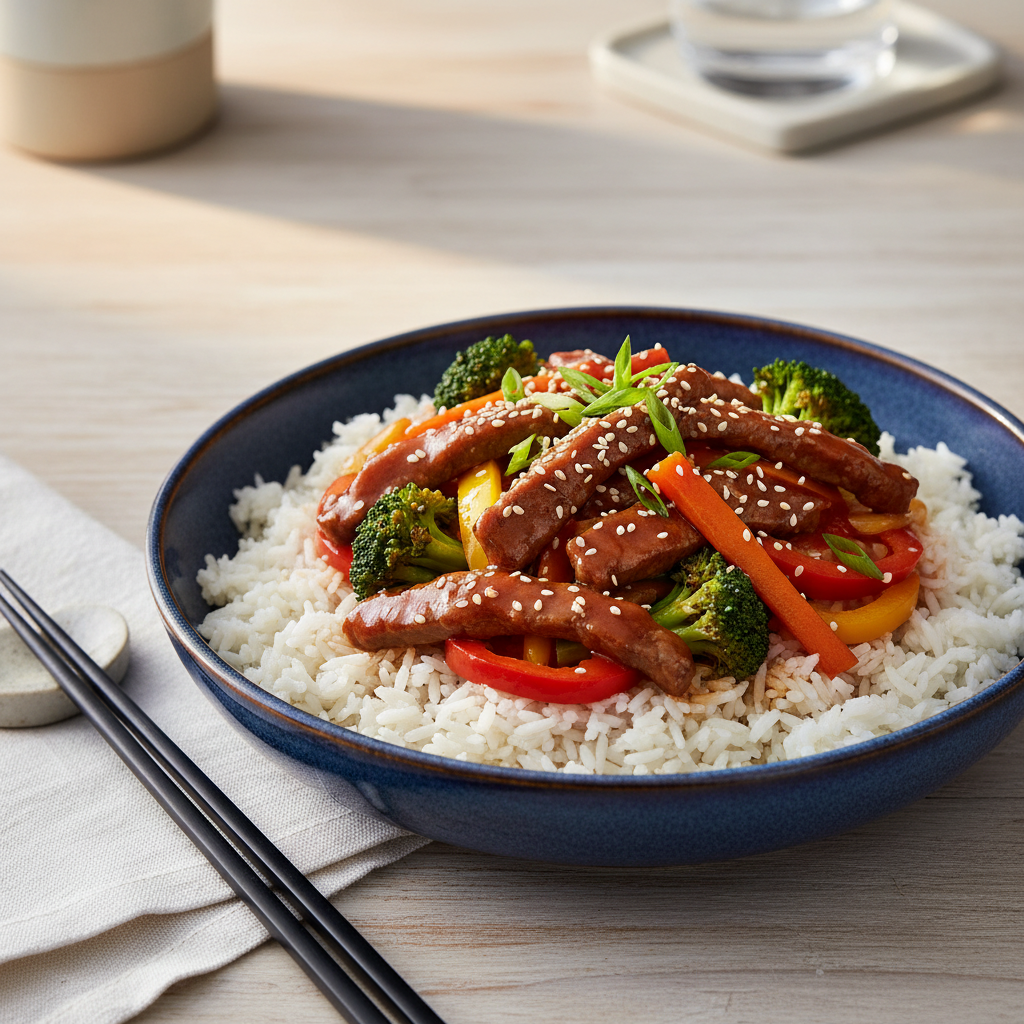
If you want the fastest path, choose two vegetables from “early,” one from “middle,” and one from “late.” That mix gives crunch, color, and a clear cooking sequence, which is what a beef stir fry quick dinner really needs.
Practical shortcuts (without turning it into bland cafeteria food)
Shortcuts are fine as long as you know what tradeoff you’re making.
- Use bagged slaw mix (cabbage + carrot) as a vegetable base, it holds up well to heat.
- Microwave broccoli for 60–90 seconds before stir-frying if you like it tender, then you only need a quick char in the pan.
- Buy “stir-fry” beef from the store, then still slice thinner if pieces look chunky.
- Keep a go-to sauce ratio: salty (soy) + sweet (honey/sugar) + acid (vinegar/citrus) + thickener (cornstarch).
One more honest tip: if your sauce tastes flat, it often needs acid, not more soy. A small splash of rice vinegar can wake the whole pan up.
Common mistakes and how to fix them next time
- “My beef is tough.” Slice across the grain, and don’t overcook. Thin slices only need a quick sear, then they finish at the end.
- “My stir-fry is watery.” Pan wasn’t hot enough or it was overcrowded. Cook in batches, especially with mushrooms or frozen vegetables.
- “Sauce is too thick and gummy.” Too much cornstarch or you reduced too long. Add a splash of water and toss over heat for 15 seconds.
- “Vegetables are mushy.” Sauce went in early or you cooked the quick vegetables too soon. Add snap peas/spinach at the very end.
Also, taste before serving. Stir-fry moves fast, and your soy sauce brand, pan size, and vegetable water content all shift seasoning.
Key takeaways (so you can repeat it without thinking)
- Prep first, cook fast: once the pan is hot, you should be able to cook without chopping.
- High heat + space = sear: don’t crowd the pan, especially for beef.
- Add sauce at the end: it’s a finishing move, not a simmering liquid.
- Match vegetable timing: slow ones small and early, quick ones late.
Conclusion: a weeknight method you can keep in your back pocket
A good stir-fry isn’t complicated, it’s just precise in a few spots. If you slice the beef thin, keep the pan hot, and stagger vegetables by cook time, a beef stir fry quick dinner stops feeling like a gamble and starts feeling like a plan.
Pick one vegetable combo you like, save the sauce ratio, and run it back next week. Once you have your personal “default” version, you’ll spend less time searching recipes and more time eating.
FAQ
How do I make beef stir fry quick without a wok?
Use the largest skillet you own, ideally stainless steel or cast iron. Preheat longer than you think, then cook beef in batches so it sears instead of steaming.
What vegetables are best for a quick beef stir-fry?
Snap peas, bell peppers, onions, and thin-sliced mushrooms cook fast and still keep texture. If you want broccoli or carrots, cut them small so they don’t slow the whole dish down.
Why does my beef get chewy even when I don’t overcook it?
Usually it’s slicing with the grain or slices that are too thick. Look at the muscle fibers and cut across them, then keep the sear short and finish in the sauce.
Can I use frozen vegetables in a beef stir-fry quick recipe?
Yes, just expect more moisture. Cook them in smaller batches, and let the pan recover heat between additions so you don’t end up with a watery sauce.
What’s a simple stir-fry sauce if I don’t have oyster sauce?
Soy sauce + something sweet + something acidic + cornstarch gets you most of the way there. Taste at the end and adjust with vinegar or a pinch of sugar rather than dumping in more soy.
How do I know when the beef is safe to eat?
Food safety depends on internal temperature and handling. According to USDA Food Safety and Inspection Service, using a food thermometer is the most reliable method; if you have health concerns, consider asking a qualified professional for guidance.
What should I serve with quick beef stir-fry?
Steamed rice is the easiest, but noodles, cauliflower rice, or a simple cucumber salad work too. The main thing is having your base ready so the stir-fry doesn’t sit in the pan and soften.
If you’re trying to get dinner on the table faster, consider pre-slicing a pound of beef and washing/chopping two vegetables on the weekend, then storing them separately, it’s a small habit that makes weeknight stir-fry feel almost effortless.