
One pan dinners are the weeknight move when you want real food, minimal dishes, and a plan you can repeat without thinking too hard.
If you have ever cooked something “healthy” and ended up with a sink full of pans, you already know the problem: effort and cleanup can quietly kill consistency. The goal here is not fancy. It is reliable dinners that fit a normal schedule.
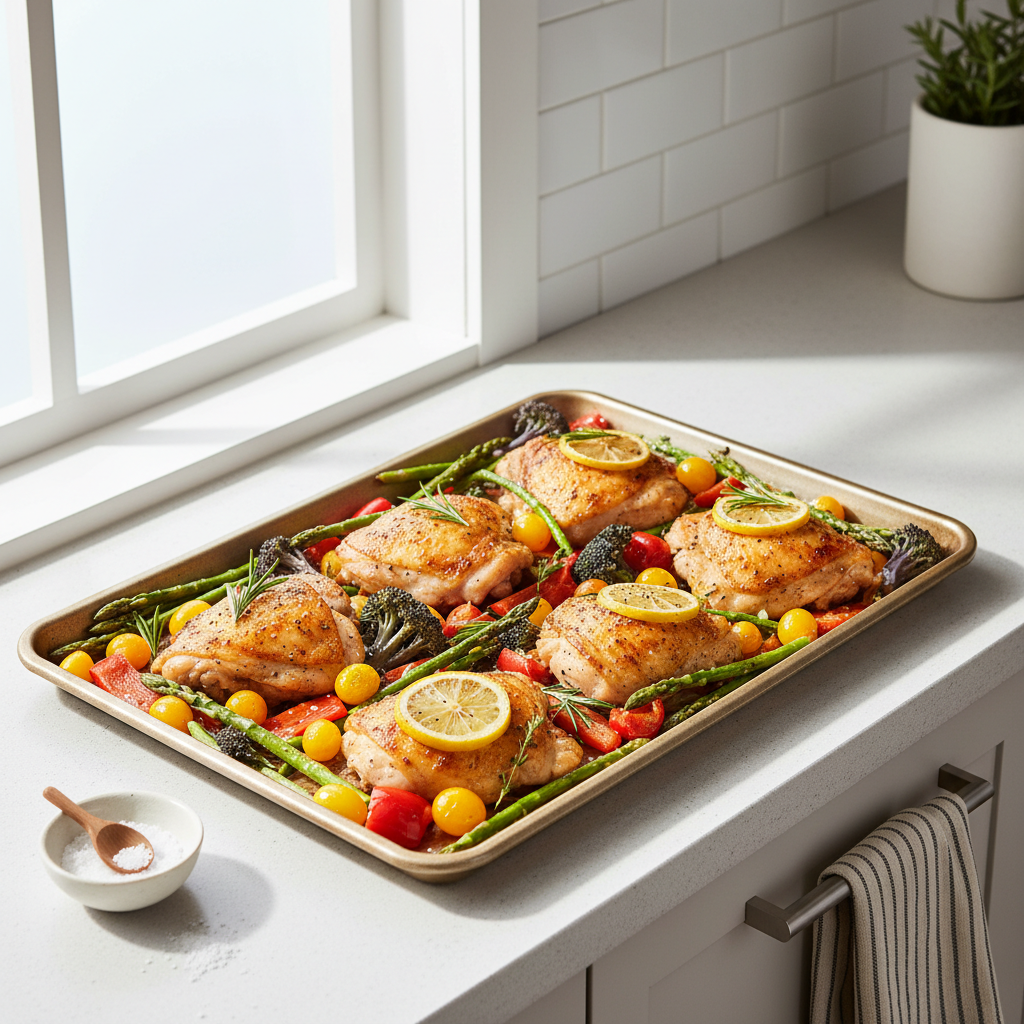
This guide breaks down why one-pan cooking works, how to build balanced plates without overtracking macros, and the small technique tweaks that keep food from turning soggy. You will also get a practical table of cook times, a few “plug-and-play” combos, and a short checklist for common mistakes.
What “healthy one pan dinners” really means (and what it doesn’t)
Healthy usually means nutrient-dense, reasonable portions, and not relying on heavy sauces to make everything taste like something. But it does not mean bland, low-fat everything, or skipping carbs automatically.
According to the USDA Dietary Guidelines for Americans, a balanced plate often includes vegetables, protein foods, and grains or starchy vegetables, with limits on added sugars and saturated fat. You can translate that into one-pan cooking pretty easily: build color, choose a solid protein, add a smart carb, then manage oil and salt with intention.
- Good sign: lots of veg volume, enough protein to satisfy, seasoning that tastes like dinner.
- Watch-out sign: everything is “healthy” but you are hungry again in an hour, then snacks take over.
Why one-pan meals fail in real kitchens (and how to avoid it)
Most disappointing one pan dinners are not about the recipe. They fail because heat, moisture, and timing get ignored. If you fix those, the same ingredients suddenly taste restaurant-adjacent.
Common failure points
- Overcrowding: packed pans steam instead of roast, vegetables turn soft, protein goes pale.
- Mismatched cook times: broccoli wants one timeline, potatoes want another, shrimp wants a third.
- Too much liquid: bottled marinades, watery veg, and extra sauce can flood the pan.
- Wrong pan choice: a thin warped sheet pan cooks unevenly, a small skillet traps moisture.
One simple rule saves a lot: roast items that like similar heat together, and add quick-cooking ingredients halfway through.
A quick self-check: which one-pan setup fits your weeknights?
Before you shop, be honest about what actually happens at 6:30 p.m. Your best plan is the one you will repeat.
- “I can prep 10 minutes.” Choose pre-cut veg, quick proteins (salmon, shrimp, chicken cutlets), microwaveable grains on the side.
- “I can prep 20–25 minutes.” Whole veggies, chicken thighs, sausages, and tray-bake combos become realistic.
- “I need leftovers.” Lean toward sheet-pan roasted proteins + sturdy veg (carrots, Brussels sprouts) that reheat well.
- “I’m feeding picky eaters.” Keep seasoning modular: roast plain components, finish with sauces at the table.
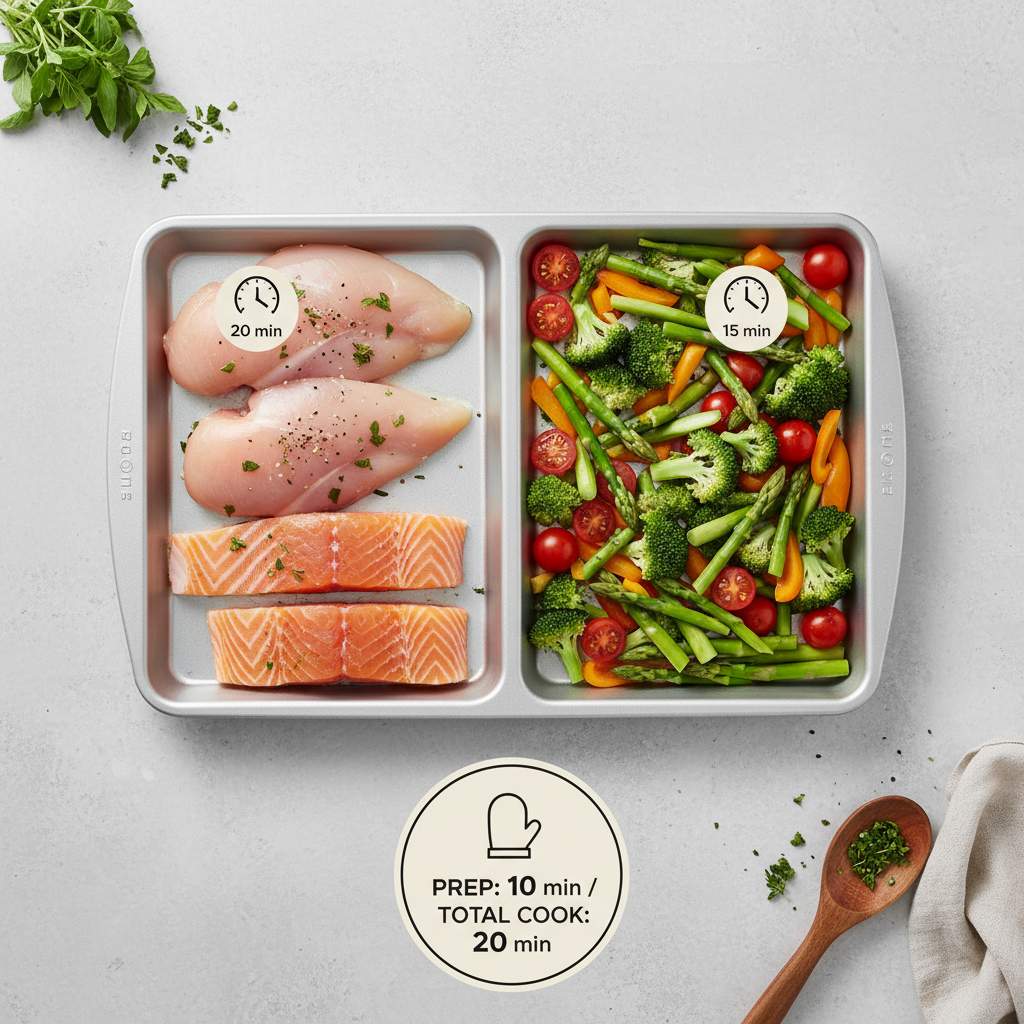
If your schedule changes daily, build a “default” one-pan template you can flex, instead of hunting new recipes every time.
The no-fuss formula: build one pan dinners that feel balanced
When people say they want healthy one pan dinners, what they often mean is “I want a meal that holds me until tomorrow’s lunch without a complicated plan.” This formula helps.
Base template (easy to remember)
- Protein: chicken thighs, salmon, tofu, turkey sausage, chickpeas
- Vegetables (2 colors minimum): broccoli, peppers, zucchini, green beans, Brussels sprouts
- Smart carb (optional but useful): baby potatoes, sweet potatoes, cauliflower gnocchi, pre-cooked farro served alongside
- Flavor system: spice blend + acid (lemon/vinegar) + a finishing sauce you add after cooking
Keep oil measured. A lot of “healthy” meals quietly become high-calorie because oil is free-poured. A tablespoon goes fast on a sheet pan.
Cook-time table: match ingredients without guessing
Use this as a starting point. Ovens vary, pan thickness varies, and the size of your cuts matters, so treat times as ranges and use a thermometer when you can.
| Ingredient | Typical oven temp | Approx time | Practical tip |
|---|---|---|---|
| Chicken thighs (bone-in) | 425°F | 30–40 min | Give skin space, finish under broil for crisp |
| Chicken breast (cutlets) | 425°F | 15–20 min | Cut evenly so it doesn’t dry out |
| Salmon fillet | 400–425°F | 10–14 min | Add near the end if veggies need longer |
| Extra-firm tofu | 425°F | 25–35 min | Press first, toss with cornstarch for crisp edges |
| Broccoli florets | 425°F | 12–18 min | Dry well to avoid steaming |
| Brussels sprouts (halved) | 425°F | 18–25 min | Cut-side down for browning |
| Baby potatoes (halved) | 425°F | 25–35 min | Parboil 8 min if you are impatient |
Key takeaway: pick one “long cook” item and one “short cook” item, then stagger when they hit the pan. That is the secret behind most dependable one pan dinners.
Step-by-step: three healthy one-pan combos you can repeat
These are not “magic” recipes, they are repeatable patterns. Swap vegetables based on what looks good or what you already have.
1) Lemon-herb chicken + roasted broccoli + potatoes
- Toss halved baby potatoes with olive oil, salt, pepper, garlic powder, roast 15 minutes at 425°F
- Add chicken thighs seasoned with lemon zest, oregano, paprika
- Add broccoli in the last 15 minutes, finish with lemon juice after roasting
2) Chili-lime salmon + peppers/onions (taco bowl vibe)
- Roast sliced peppers and onions 10 minutes at 425°F
- Push veg to the sides, place salmon in the middle, season with chili powder, cumin, lime zest
- Finish with lime juice and a spoon of plain Greek yogurt or avocado at the table
3) Crispy tofu + green beans + mushrooms (savory, not sad)
- Press tofu, cube it, toss with soy sauce, sesame oil (light), cornstarch
- Roast tofu 15 minutes at 425°F, flip
- Add green beans and mushrooms, roast 10–15 minutes more, finish with rice vinegar
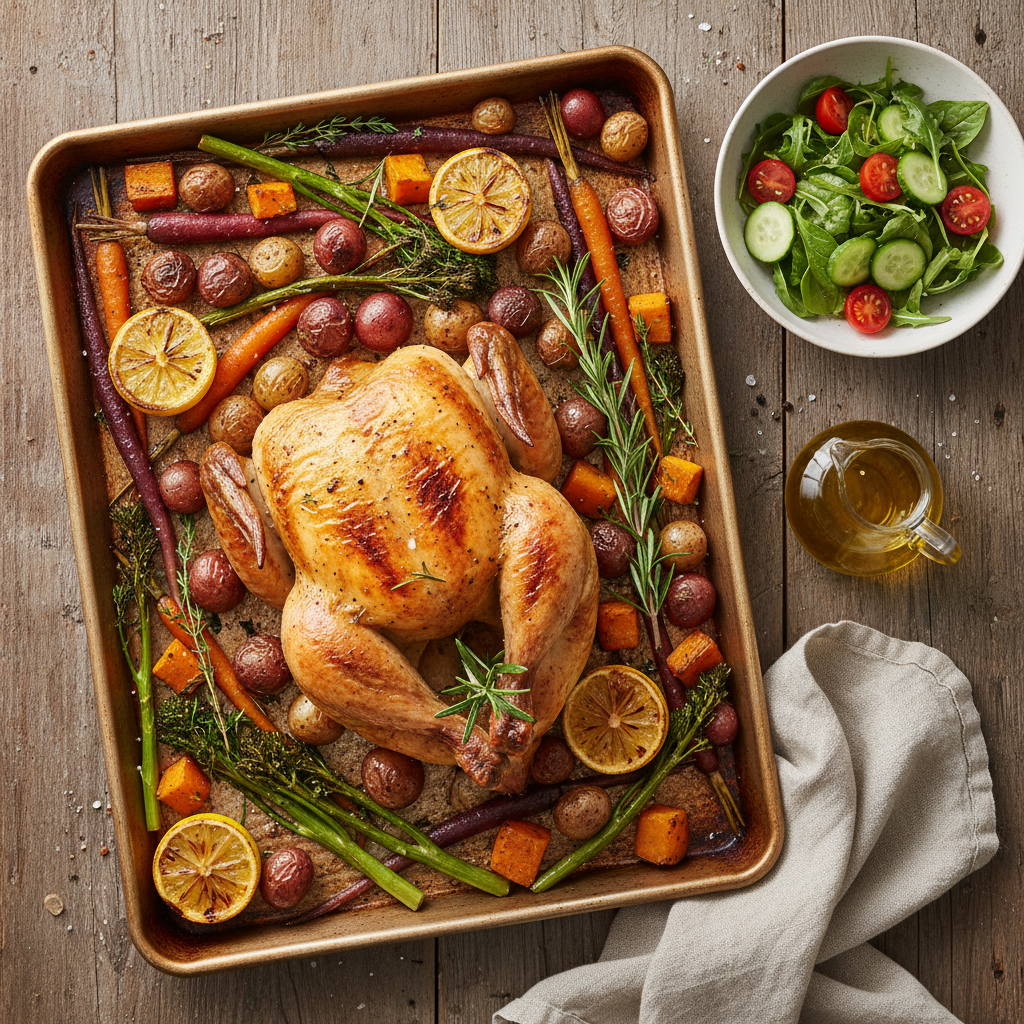
If you want one extra win: make a quick “finisher” sauce once per week, like tahini-lemon, yogurt-dill, or salsa verde. Put it on after cooking so your pan still roasts instead of braises.
Practical tips that make cleanup truly no-fuss
A lot of people try one-pan cooking and still feel annoyed because the pan becomes a crusty mess. Usually it is one of these fixes.
- Use parchment for roasted veggies and proteins, foil for sticky sauces, and skip sprays that burn fast.
- Preheat the pan when roasting vegetables for better browning, but be careful adding oil to a hot pan.
- Keep sugar for the end, honey and some bottled teriyaki-style sauces can scorch at 425°F.
- Rest proteins 5 minutes so juices stay in the meat, not on the cutting board.
- Food safety: use a thermometer for chicken and reheat leftovers thoroughly, if you have health concerns, consider asking a qualified professional.
According to the USDA Food Safety and Inspection Service, using a food thermometer is one of the most reliable ways to confirm doneness and reduce risk from undercooked meats.
Conclusion: make it repeatable, not perfect
The best one pan dinners are the ones you can pull off when you are tired, not the ones that look impressive on a weekend. If you keep your timing realistic, give ingredients space, and finish with acid or a simple sauce, “healthy” starts to feel normal.
Action step for tonight: pick one protein and two vegetables you already like, roast at 425°F, add the fastest-cooking item later, then finish with lemon or vinegar. Do it twice this week and you will have your own default rotation.
FAQ
What are the healthiest one pan dinners for weight loss?
Many people do well with a protein-forward tray bake plus high-volume vegetables, then portioning starches intentionally. It is less about a “diet recipe” and more about repeatable portions and not overdoing oil or sugary sauces.
Can I meal prep one pan dinners for the week?
Yes, but choose ingredients that reheat well, like chicken thighs, roasted carrots, Brussels sprouts, and potatoes. Delicate items like shrimp can get rubbery after reheating, so those are better for same-day meals.
Why do my sheet pan vegetables turn out soggy?
Overcrowding is the usual culprit, then moisture from wet vegetables or too much marinade finishes the job. Dry vegetables well, spread them out, and roast hot enough to encourage browning.
What’s the best temperature for most one pan dinners?
425°F is a common sweet spot for roasting because it browns vegetables and cooks many proteins efficiently. If you are using sugary sauces or very delicate fish, dropping to 400°F can be easier to manage.
How do I keep chicken from drying out on a sheet pan?
Use thighs more often, they are forgiving. If you prefer breast meat, slice into even cutlets and pull them as soon as they reach a safe internal temperature, then rest briefly.
Are one pan dinners safe if I cook raw meat and vegetables together?
They can be, but avoid letting raw juices coat quick-cooking vegetables that might finish early. Keeping ingredients in distinct zones and verifying doneness with a thermometer is a sensible approach.
What pans work best for one pan dinners?
A sturdy, rimmed sheet pan or a heavy oven-safe skillet usually performs well. Thin pans can warp and cook unevenly, which makes timing harder than it needs to be.
If you are trying to build a small rotation of one pan dinners that match your goals, schedule, and grocery budget, it can help to map 6–8 “default” combos and a couple finish sauces, so you stop reinventing dinner every night.