
Caramel sauce homemade is one of those things that feels intimidating until you see what actually matters: heat control, timing, and not stirring at the wrong moment.
If you’ve ever ended up with a bitter, burnt pan or a sauce that crystallizes into a gritty mess, you’re not alone. Caramel is fast, and it punishes distractions, but it’s also very fixable once you know the “why.”
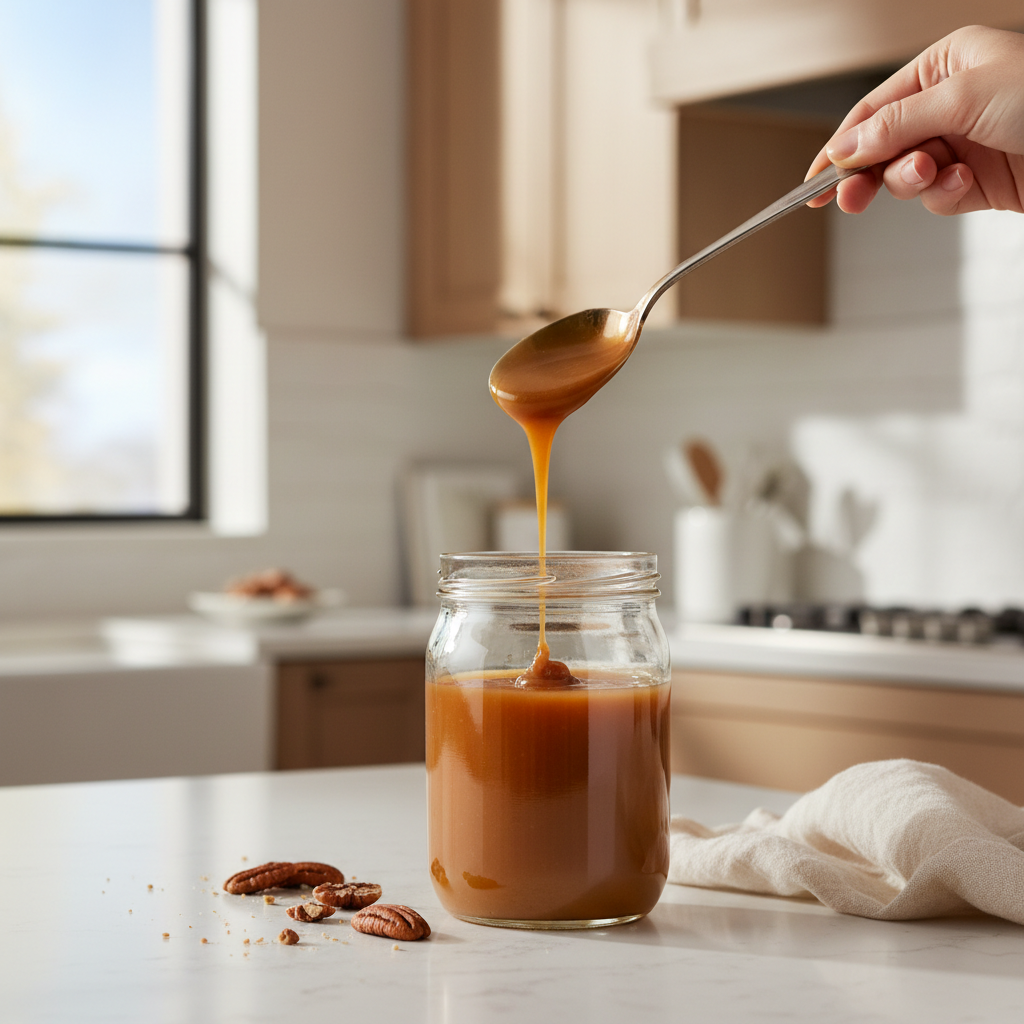
In this guide, you’ll get a simple recipe that works for most home kitchens, plus a troubleshooting map for the most common mistakes. I’ll also share a few “choose-your-own” options for thickness, salt level, and storage so the sauce behaves the way you want it to.
What makes caramel tricky (and how to make it less stressful)
Caramel is basically sugar pushed to a specific temperature range, where it darkens and develops flavor. The tricky part is that sugar can swing from “not ready” to “too far” quickly.
- Crystallization: stray sugar crystals (or stirring) can seed a chain reaction, turning sauce grainy.
- Burning: the difference between amber and bitter can be a minute, especially on high heat.
- Splattering: adding cream to hot sugar creates aggressive bubbling; burns are a real risk.
According to the USDA, hot sugar syrups can cause severe burns, so long sleeves, a stable pot, and keeping kids/pets out of the splash zone is just common sense.
Simple caramel sauce homemade recipe (wet method)
This is the “wet caramel” approach, where you dissolve sugar in water first. It tends to be calmer for beginners because it browns more evenly and gives you a tiny bit more margin.
Ingredients
- 1 cup (200g) granulated sugar
- 1/4 cup (60ml) water
- 6 tbsp (85g) unsalted butter, cut into pieces
- 1/2 cup (120ml) heavy cream, warmed (microwave 20–30 seconds)
- 1/2 to 1 tsp kosher salt (optional, to taste)
- 1 tsp vanilla extract (optional)
Tools that genuinely help
- Heavy-bottom saucepan (2–3 quart)
- Silicone spatula or wooden spoon
- Pastry brush + small cup of water (for brushing down sugar on the sides)
- Optional: candy thermometer (helpful, not mandatory)
Step-by-step method
- Combine sugar and water in the saucepan, gently swirl to moisten all sugar. Avoid splashing sugar onto the sides.
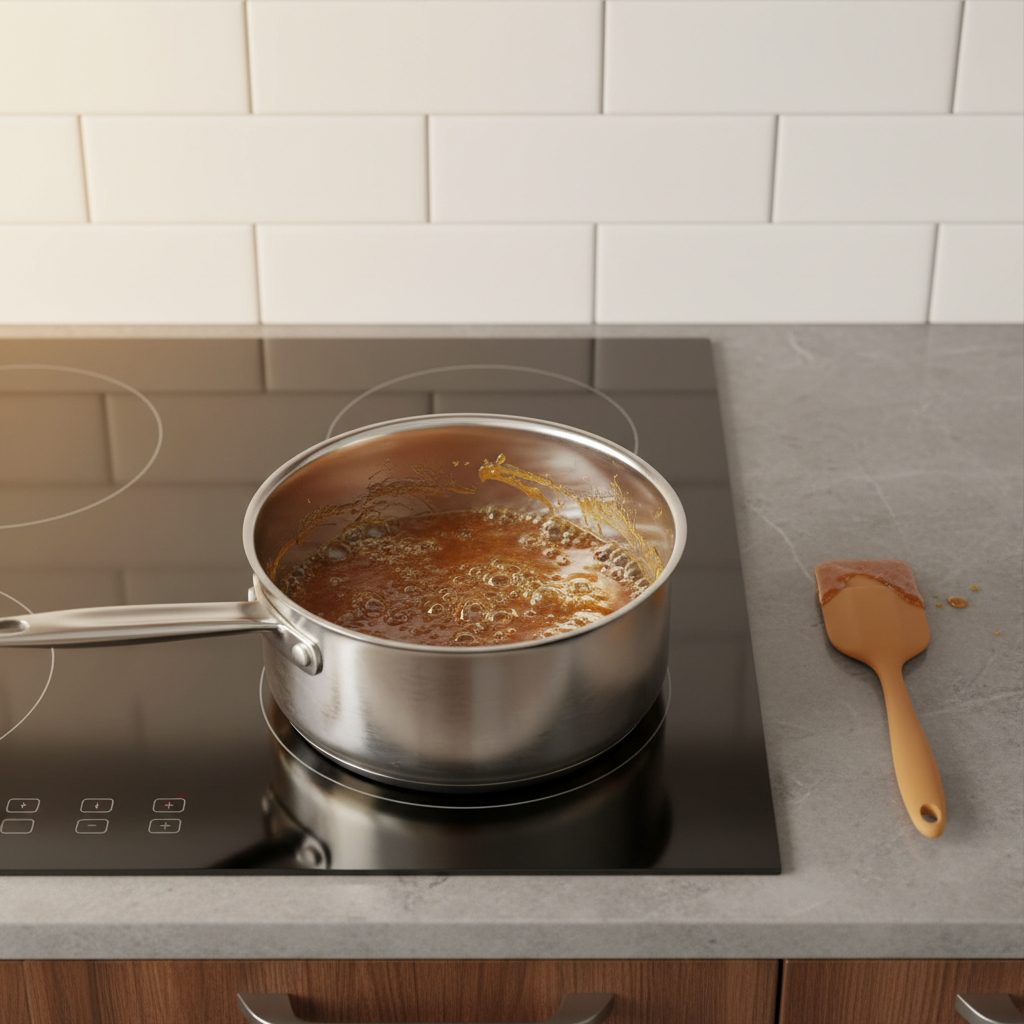
- Heat over medium until the mixture boils. Once it boils, do not stir. If crystals appear on the side, brush them down with a damp pastry brush.
- Watch for color: it will go from clear to pale straw to golden to amber. When it hits a medium amber (like a new penny), reduce heat slightly.
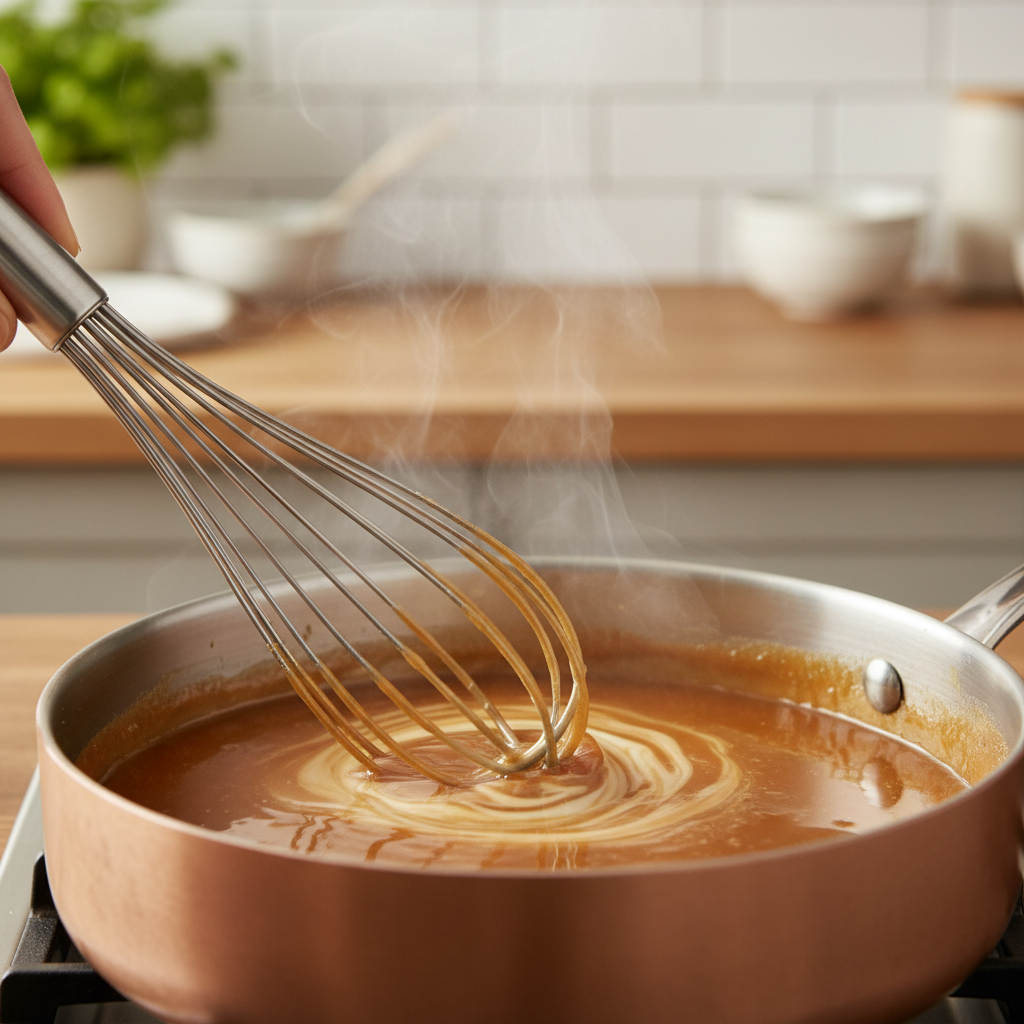
- Add butter carefully, whisking or stirring until melted and smooth. Expect bubbling.
- Slowly pour in warm cream, a little at a time, stirring steadily. It will foam up hard; keep your face back.
- Finish with salt and vanilla (optional). If the sauce seems thin, simmer 1–2 minutes; it thickens more as it cools.
Key point: Most failures come from either stirring after boiling or pushing the color too dark “because it doesn’t look ready.” If you smell bitterness, you’ve likely gone too far.
Quick self-check: what texture are you aiming for?
People say they want “caramel,” but they often mean different things: drizzle for ice cream, a thicker sauce for coffee, or a firm-ish caramel for candy-style desserts. Use this quick guide to set expectations.
| Use case | How dark to cook sugar | How long to simmer after cream | Notes |
|---|---|---|---|
| Ice cream drizzle | Golden to light amber | 0–1 min | Sweeter, milder flavor |
| Cheesecake topping | Medium amber | 1–2 min | Balances sweetness and depth |
| Salted caramel sauce | Medium amber | 1–2 min | Add salt gradually, taste after cooling slightly |
| Coffee or latte mix-in | Light to medium amber | 0–1 min | Thinner helps it dissolve |
If you’re new, stop at medium amber. Dark caramel has a grown-up bitterness that some people love, but it’s also where burning happens fastest.
Troubleshooting: fix the common problems fast
This is the part most recipes skip, but it’s what you need when a batch goes sideways.
My caramel crystallized (grainy sugar clumps)
- Usually caused by stirring after boiling, or undissolved sugar stuck on the sides.
- Try adding a splash of water and gently reheating to dissolve, then proceed without stirring.
- Next time: brush down the sides early, and keep the pot calm (no stirring, no scraping).
It seized when I added cream (hard lump, sauce won’t smooth out)
- Cold cream can shock the caramel; warm cream reduces this.
- Put the pot back on low heat and stir gently. Many seize-ups melt back into a smooth caramel.
It tastes burnt or too bitter
- Unfortunately, burnt flavor doesn’t really “fix.” You can sometimes mellow mild bitterness with more cream and a pinch of salt, but truly burnt caramel should be restarted.
- Next time: pull earlier. Caramel keeps darkening from residual heat.
My sauce is too thin or too thick
- Too thin: simmer 1–3 minutes, then cool. Thickness shows up more after chilling.
- Too thick: stir in small amounts of warm cream or warm water until it loosens.
Practical tips that make caramel sauce homemade more reliable
- Use a light-colored saucepan if possible. You’ll judge amber color more accurately than in a dark pan.
- Warm the cream so the temperature gap is smaller, less violent bubbling, fewer seize-ups.
- Don’t multitask. Caramel is the opposite of “set it and forget it.”
- Salt at the end. Salt perception changes as it cools, so add, wait 30 seconds, taste, then adjust.
- Skip the whisk at the sugar stage. Stirring encourages crystallization once boiling begins.
Key takeaway: control the boil, watch color, and treat the cream add-in like a safety step, not a casual pour.
Storage, reheating, and food-safety notes
Most homemade caramel sauce keeps well, but dairy-based sauces deserve basic care.
- Storage: Cool, then store in a clean jar with a tight lid in the refrigerator.
- Reheat: Warm in short microwave bursts (10–20 seconds), stirring between, or warm gently on the stovetop.
- Consistency after chilling: It will firm up in the fridge; that’s normal.
According to the FDA, perishable foods made with dairy should be refrigerated promptly. If you have specific dietary or food-safety concerns, it may be worth checking with a qualified professional, especially for serving infants, older adults, or anyone immunocompromised.
Easy ways to use caramel sauce (without overthinking it)
- Drizzle on ice cream, brownies, apple pie, or baked pears
- Stir into coffee, cold brew, or hot chocolate
- Swirl into cheesecake batter, yogurt, or oatmeal
- Dip apple slices, pretzels, or shortbread cookies
If you want a “grown-up” version, add flaky sea salt on top of the dessert, not just in the sauce. It gives you little pops of salt instead of one uniform saltiness.
Conclusion: a simple method you can repeat
Caramel sauce homemade gets easy once you stop treating it like a mystery and start treating it like a timing recipe. Keep the sugar calm, aim for medium amber, add warm cream slowly, and you’ll land on a smooth, glossy sauce you can use all week.
If you’re making this for an event, do a practice batch the day before, then adjust thickness and salt after you see how it behaves in your fridge and on your desserts.
FAQ
Why did my caramel sauce turn grainy after it cooled?
That’s usually crystallization, often triggered by stirring once boiling starts or by sugar crystals stuck on the pan sides. Reheating with a splash of water can sometimes smooth it out.
Can I make caramel sauce homemade without a thermometer?
Yes. Color is the most practical cue at home. Medium amber is a safer stopping point than dark amber until you know your stove’s behavior.
What’s the difference between wet caramel and dry caramel?
Wet caramel starts with sugar plus water; dry caramel melts sugar directly. Dry caramel can be faster but tends to punish uneven heat and rushed stirring.
Can I use milk instead of heavy cream?
In many cases it works, but the sauce often ends up thinner and can split more easily. If you try it, warm the milk and add slowly, then simmer briefly to thicken.
How do I make salted caramel sauce taste balanced, not “salty”?
Add salt gradually at the end and taste after the sauce cools slightly. Kosher salt and flaky salt behave differently, so start small and adjust.
How long does homemade caramel sauce last in the fridge?
It varies by recipe and storage hygiene, but many dairy-based sauces keep for about 1–2 weeks when refrigerated in a clean, sealed container. If it smells off or shows mold, discard it.
My caramel seized into a hard ball—should I toss it?
Not immediately. Put it back on low heat and stir gently; many seize-ups melt smooth. If it smells burnt, restarting is usually the better call.
If you’re making caramel often and want a more “set-and-repeat” routine, it can help to write down your exact color stop point, pot size, and burner setting so your next batch matches the one you liked, that small habit saves more batches than any fancy trick.