
Waffle recipes can be surprisingly simple, but if you’ve ever pulled a waffle that looked golden and still turned limp on the plate, you already know the real goal is texture, not just taste.
This guide stays practical: a few reliable batters, the small technique moves that create crisp edges, and quick fixes when things go sideways. You’ll also get make-ahead options so “easy” still holds true on busy mornings.
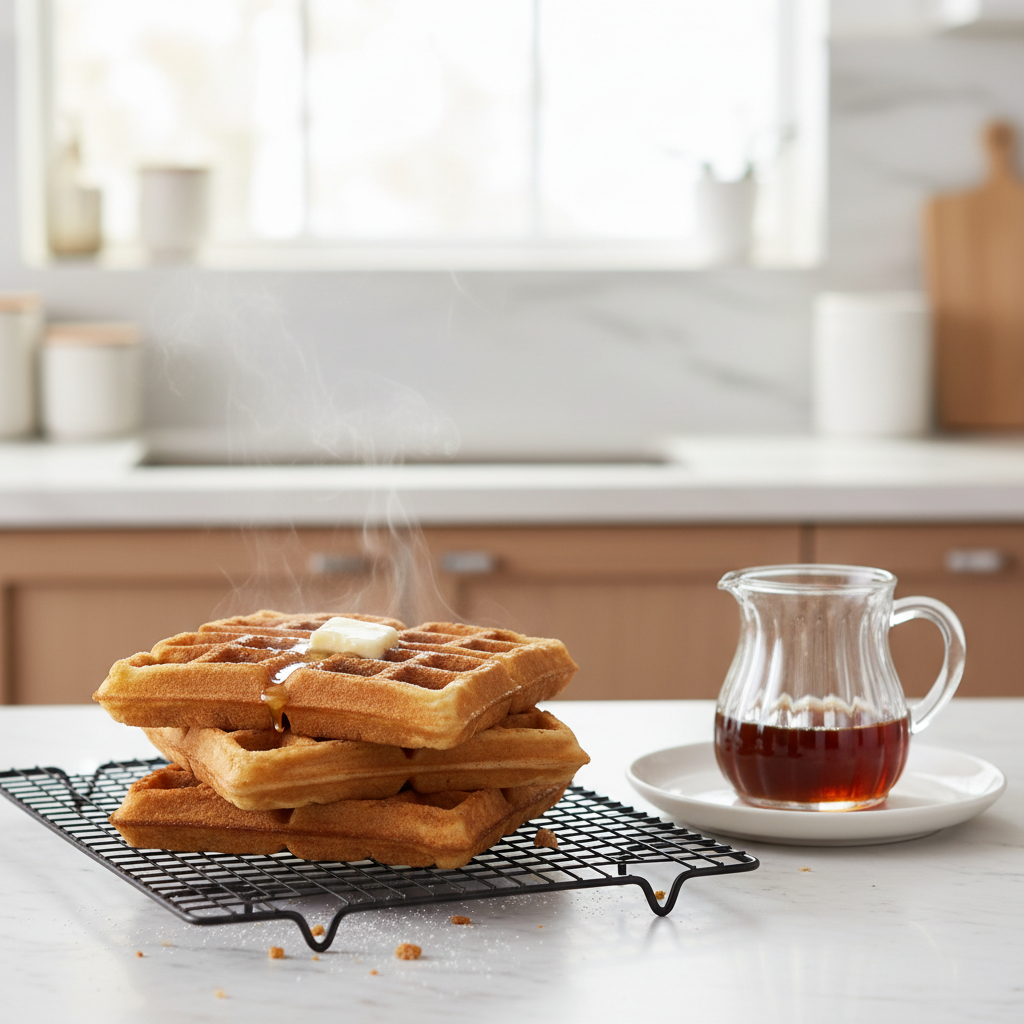
One quick mindset shift helps: a waffle iron is closer to a mini oven than a skillet. Steam has to escape for crunch, and that’s why timing, batter thickness, and post-iron cooling matter as much as the ingredient list.
What actually makes waffles crispy (and what makes them soggy)
If you want that restaurant-style snap, focus on moisture control and browning. “Crispy” is mostly about drying the surface while the inside stays tender.
- Heat and full preheat: irons that aren’t fully hot start steaming the batter before it sets, which often leads to pale, soft waffles.
- Fat and sugar: fat helps with browning and texture, sugar helps crisp and color, but too much sugar can burn in hotter irons.
- Starch structure: flour choice and batter thickness decide whether you get fluffy, cakey, or thin-and-crisp results.
- Cooling method: stacking hot waffles traps steam, and steam is the enemy of crunch.
According to USDA Food Safety and Inspection Service (FSIS), hot foods should not be held in the temperature “danger zone” for long periods; if you’re keeping waffles warm for a crowd, use a low oven and don’t leave them out for extended time.
Quick self-check: which waffle problem are you dealing with?
Before you change recipes, figure out the failure mode. Most “bad” waffles come from a few repeat issues.
- Waffles look done but feel soft: underbaked in the iron, or stacked too soon.
- Sticking to the plates: not hot enough, batter too wet, or iron needs seasoning/cleaning.
- Burning outside, raw inside: heat too high for that batter, or batter too thick for the iron style.
- Dense and bready: overmixed batter, or not enough leavening, or batter sat too long.
- Not browning: too little sugar/fat, low heat, or too much liquid.

If you’re unsure, run this tiny test: cook one waffle a full minute longer than you think you need, then cool it on a rack for 3 minutes. If it turns crisp, your recipe is fine, your timing is the issue.
3 easy waffle batters that reliably crisp
These waffle recipes are built for weeknights and weekends: common ingredients, minimal steps, and predictable texture. Adjust iron settings as needed since models vary.
1) Classic Buttermilk Crispy Waffles (all-purpose flour)
- Best for: fluffy center with crisp edges
- Time: 10 minutes prep, 4–6 minutes cook each (varies by iron)
Ingredients
- 2 cups all-purpose flour
- 2 tbsp sugar
- 1 tbsp baking powder
- 1/2 tsp baking soda
- 1/2 tsp kosher salt
- 2 cups buttermilk
- 2 large eggs
- 6 tbsp melted butter (cooled slightly) or neutral oil
- 1 tsp vanilla (optional)
Method
- Preheat iron fully; if it has a dial, start medium-high.
- Whisk dry ingredients in one bowl, whisk wet in another.
- Combine just until no dry pockets remain, small lumps are fine.
- Cook until steam slows significantly and waffle releases easily.
- Cool on a wire rack, not a plate, for maximum crunch.
2) Extra-Crisp Cornstarch Waffles (hotel-style crunch)
- Best for: audible crisp, lighter bite
- Why it works: cornstarch reduces gluten development and helps the shell dry
Ingredients
- 1 1/2 cups all-purpose flour
- 1/2 cup cornstarch
- 2 tbsp sugar
- 1 tbsp baking powder
- 1/2 tsp salt
- 1 3/4 cups milk
- 2 large eggs
- 1/2 cup melted butter or neutral oil
Method
- Mix dry, mix wet, combine gently.
- Let batter rest 5 minutes while iron finishes heating.
- Cook a little longer than usual, then rack-cool.
3) Quick Overnight Yeast Waffles (make-ahead, deeper flavor)
- Best for: brunch feel with minimal morning work
- Texture: crisp outside, airy inside
Ingredients
- 2 cups all-purpose flour
- 1 3/4 cups milk (warm, not hot)
- 2 tbsp sugar
- 1/2 tsp salt
- 1 tsp active dry yeast
- 6 tbsp melted butter
- 2 eggs (added in the morning)
- 1/2 tsp baking soda (added in the morning)
Method
- Night before: stir flour, milk, sugar, salt, yeast, butter until combined, cover and refrigerate.
- Morning: whisk in eggs and baking soda, batter may bubble a bit.
- Cook in a fully heated iron; rack-cool for crisping.
Technique: the small moves that make waffles crisp every time
You can use any of the batters above and still get mediocre results if the workflow is off. These steps are the difference between “fine” and “I can’t stop eating these.”
- Preheat longer than you think: most irons signal “ready” early; give it another 3–5 minutes if you can.
- Oil only if you need it: many nonstick irons do better with little to no spray; aerosols can leave residue. If sticking happens, brush a thin layer of oil.
- Don’t peek: opening early releases heat and interrupts setting, especially with thicker batters.
- Cook until steam slows: visual cue beats the timer when irons vary.
- Cool on a rack: even 2 minutes of airflow helps set the crust.
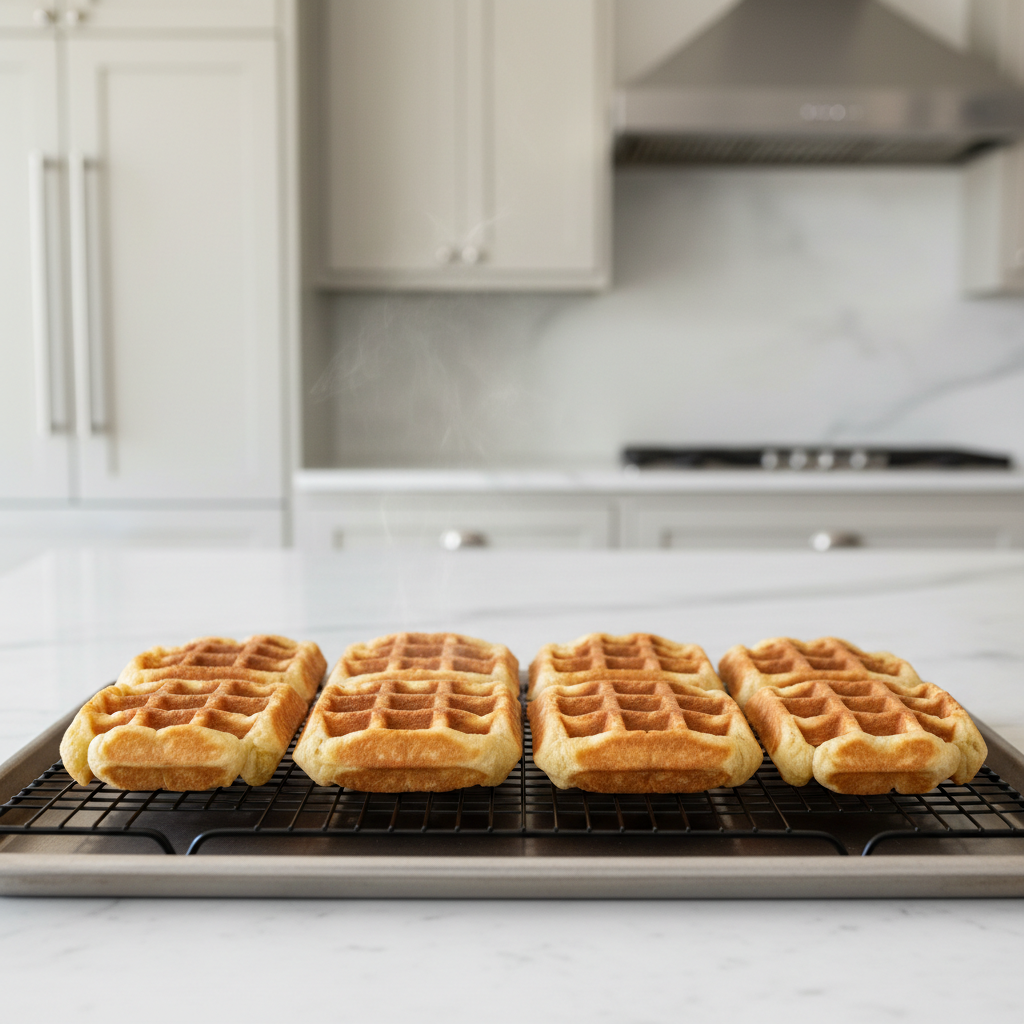
Key point: if you’re feeding a group, keep finished waffles in a 200°F oven directly on the rack (not stacked), and serve in batches.
Ingredient swaps and add-ins (without ruining the crunch)
Add-ins are where many waffle recipes quietly fall apart, mostly because extra moisture sneaks in.
- Whole wheat: swap up to 1/2 the flour; beyond that, expect a denser waffle unless you add a bit more liquid and a longer rest.
- Greek yogurt: great for tang, but thick; thin with milk so batter still pours.
- Blueberries: use fresh and toss with a teaspoon of flour; frozen berries often bleed and add water.
- Chocolate chips: add after pouring batter into the iron to reduce sinking and scorching on the plates.
- Banana: tasty but moist, and crispness usually drops; consider sliced banana on top instead.
If you want a lighter interior, separating eggs helps: fold in whipped egg whites at the end. It’s one extra bowl, but it changes the texture fast.
Make-ahead, freezing, and reheating (so they stay crisp)
This is the part most people skip, then wonder why leftovers are sad. Waffles can reheat well if you treat them like baked goods, not pancakes.
- To store: cool completely on a rack, then refrigerate in a container with paper towel to absorb moisture.
- To freeze: freeze flat on a sheet pan first, then bag. This prevents a frozen waffle brick.
- To reheat: toaster or 350°F oven until hot and dry at the edges. Microwave reheating usually makes them soft.
Food safety varies by kitchen and timing. If waffles sit out for a long breakfast, it’s smart to use a warm oven and refrigerate leftovers sooner rather than later, and if you have specific concerns, consider guidance from a healthcare professional.
At-a-glance guide: pick the right waffle style
If you’re choosing between batters, this table is the simplest way to match effort to outcome.
| Recipe style | Texture | Best toppings | Good for |
|---|---|---|---|
| Classic buttermilk | Crisp edges, fluffy center | Butter, maple syrup, berries | Weekends, family breakfasts |
| Cornstarch crisp | Extra crunchy shell | Fried chicken, honey, whipped cream | Brunch “wow” factor |
| Overnight yeast | Airy, lightly tangy | Fruit compote, powdered sugar | Hosting, low-effort mornings |
Conclusion: the fastest path to crispy waffles
The quickest improvement for most kitchens is simple: cook a bit longer, then let the waffle breathe on a rack. Once you do that, the batter choice becomes fun instead of stressful.
If you want a low-drama routine, pick one base batter from above, make it three times in a row, and only change one variable at a time, heat setting, batter thickness, or cook time. That’s how you dial in your iron and land on a waffle you can repeat.
FAQ
Why are my waffles crispy in the iron but soft on the plate?
Steam gets trapped when a hot waffle hits a flat surface or gets stacked. Cool each one on a wire rack for a couple minutes, and avoid covering with foil.
How do I know when waffles are actually done?
Timers help, but steam is more reliable. When the steam slows a lot and the waffle releases easily, it’s usually finished. If it still feels soft, give it another 30–60 seconds.
Can I use pancake mix for waffle recipes?
Often, yes, but pancake batter tends to be softer. Many mixes suggest adding an egg and a bit of oil to shift texture toward waffles; check the package directions and adjust cook time.
What’s the best oil or fat for crisp waffles?
Melted butter brings flavor and browning, neutral oil can be slightly crisper and more forgiving at higher heat. If your iron runs hot, oil may reduce scorching.
Why do waffles stick even on a nonstick iron?
Common causes are incomplete preheating, too-wet batter, or residue buildup. Try longer preheat, slightly thicker batter, and a careful cleaning; avoid heavy aerosol sprays that can leave a film.
Should I rest waffle batter?
A short rest can help flour hydrate and reduce overmixing issues. Five to ten minutes is usually enough for quick batters, while yeast batters benefit from longer fermentation.
How can I keep waffles warm for a crowd without losing crispness?
Hold them in a 200°F oven directly on the oven rack or on a wire rack set over a sheet pan. Don’t stack, and serve in batches.
If you’re trying to standardize your breakfast routine, it can help to treat one of these waffle recipes as your “house base,” then keep a short note on your iron setting and ideal cook time, it’s the simplest way to get consistent crisp results without overthinking.